A Decade After Modi's Isolation Push, Pakistan Finds New Diplomatic Openings
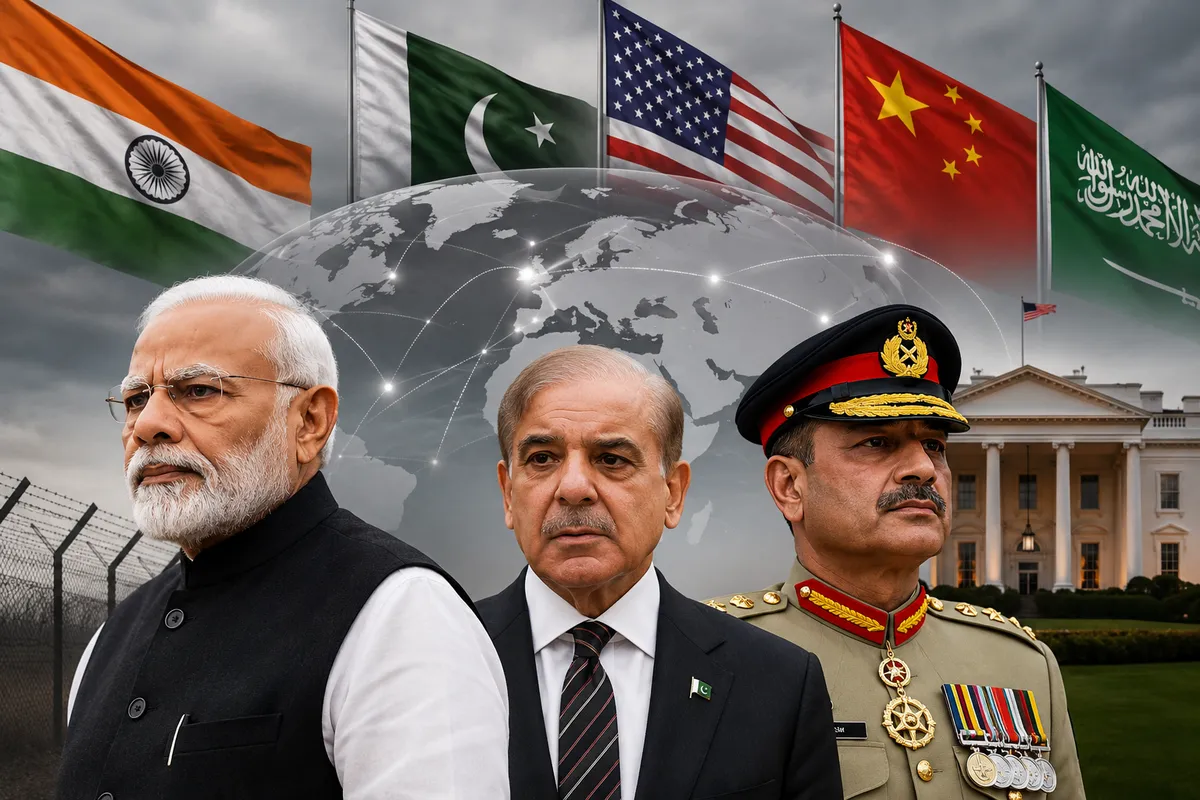
It was September 2016, dusk falling over Kerala, when Narendra Modi thumped his fist on a lectern and laid out his vision for Pakistan's future.
"India has been successful in isolating you, and we will intensify those efforts," he told the crowd, still raw with anger over an attack in Uri that had killed 18 Indian soldiers days earlier. "We will make sure that you are isolated around the world."
This week, Pakistan's Prime Minister Shehbaz Sharif sat down with Chinese President Xi Jinping in Beijing. Before that, both Sharif and Army Chief Field Marshal Asim Munir had visited Donald Trump at the White House. Pakistani officials have increasingly positioned Islamabad as a channel of communication between Washington and Tehran during periods of heightened tension, as regional diplomatic efforts intensified — a role that would have been difficult to imagine for Pakistan's military leadership even three years ago.
None of this is how Modi's plan was supposed to go.
After Uri, India pulled out of a SAARC summit Pakistan was set to host, effectively mothballing the regional bloc. New Delhi promoted alternative forums, cut back-channel contacts, and spent years building a case to major powers that Pakistan was a bad-faith actor. The strategy had a simple logic: squeeze Islamabad's room on the world stage until the cost of sheltering militant groups became unbearable.
What happened instead was May 2025. Four days of missiles, drone strikes, and air battles — the most serious military confrontation between the two nuclear-armed neighbours in decades. When the guns stopped, Trump called a press conference and announced that he had personally brokered the peace. India immediately rejected that account, insisting the ceasefire came through direct military communication with no American hand in it. Pakistan publicly thanked Trump. The split-screen moment was hard to miss.
Michael Kugelman, a senior fellow on South Asia at the Atlantic Council, told Al Jazeera that India's strategy of isolating Pakistan had "backfired in a big way."
Part of what went wrong for India was of its own making. New Delhi's deepening alignment with Israel under Modi — expanded defense ties, intelligence cooperation, public solidarity — created friction at a moment when Arab public opinion hardened sharply. India worked hard to keep its energy relationships with Saudi Arabia and the UAE intact, and largely succeeded. But the optics handed Pakistan an opening in conversations across the Muslim world that Islamabad was quick to exploit.
Then there was the question of the jets. Pakistan claimed it had shot down multiple Indian fighter aircraft during the May 2025 conflict, while India later acknowledged aircraft losses without publicly confirming numbers. Both sides insist they came out ahead. What it produced, regardless, was a narrative Pakistan could use: that it had stood its ground against a larger military and walked away without backing down.
Indian officials and analysts reject the idea that New Delhi has been diplomatically weakened. They point to India's growing role in the Indo-Pacific, its partnerships with the United States, Europe and Japan, and its position as one of the world's largest economies as evidence that its global standing remains intact despite renewed international engagement with Pakistan.
That argument carries weight. India's economy dwarfs Pakistan's. Its international partnerships are deeper and more durable than anything Islamabad can currently claim. Pakistan, for all its recent diplomatic activity, is still going back to the IMF for bailouts and still depends heavily on Gulf remittances to stay solvent.
But durability was supposed to be India's argument for why isolating Pakistan would work. A decade in, Islamabad is fielding calls from Washington rather than being frozen out of them.
Modi's Kerala speech is still on the record. So is where Pakistan stood when he gave it, and where it stands today.
Latest News
- From Students to a Nationwide Movement: The CJP Protest Explained
- Ukraine Claims Russia Preparing to Deploy 30,000 North Korean Troops
- UK Inquest Rules Saudi Prince's Death a Misadventure in London
- Muzaffarnagar Girl Dies by Suicide After School Humiliation
- Supreme Court Restricts Sharing of Court Hearing Recordings
- 19-Year-Old Protester May Lose Vision After Alleged Pellet Injury
- Supreme Court Declines Urgent Hearing on Student Protest Plea
- 10 Dead, 15 Trapped in Sikkim NHPC Tunnel Blast
- Media Propaganda: How It Shapes Public Opinion
- Meta Outage Today: Facebook, Instagram and Threads Down for Thousands Worldwide