Has India's Diplomatic Edge Begun to Fade? Pakistan's Iran Diplomacy Sparks Fresh Questions
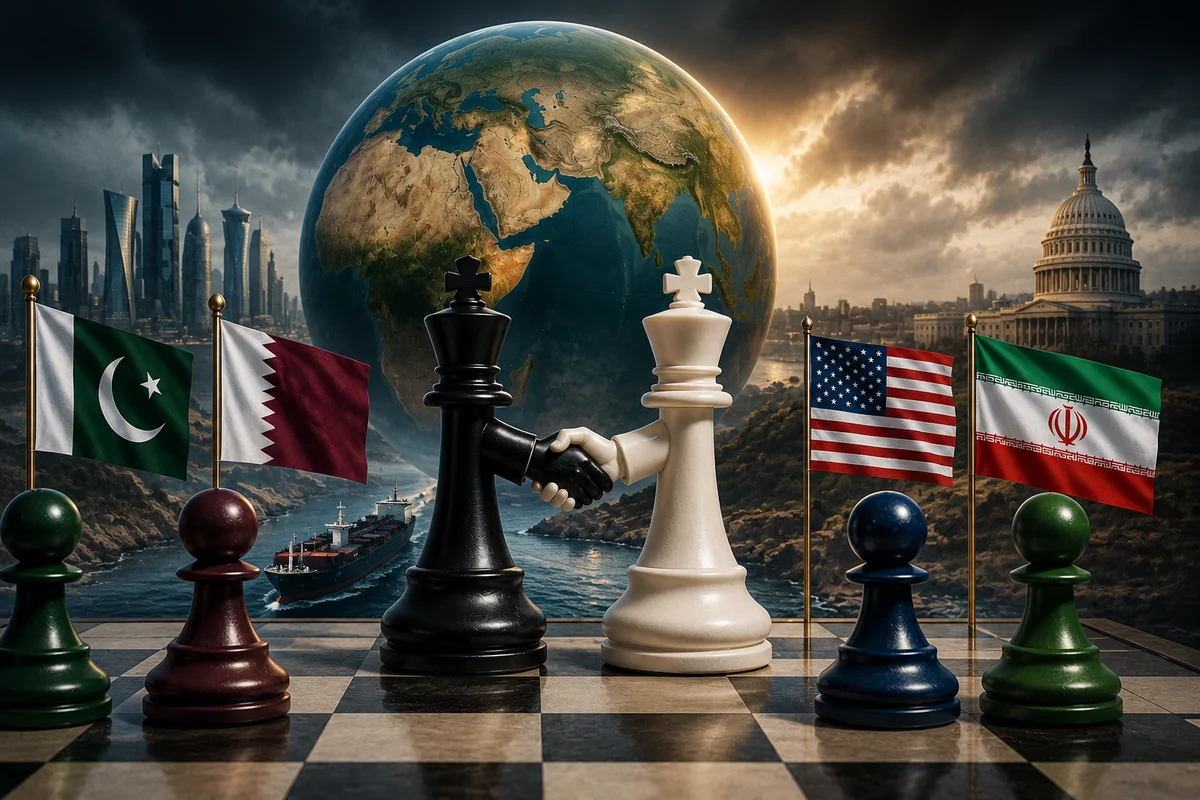
NEW DELHI, July 1 — Pakistan, working with Qatar, helped broker an interim agreement between the United States and Iran that ended months of conflict and reopened shipping through the Strait of Hormuz, Reuters and the Associated Press reported.
The deal has revived a question that has followed India's diplomacy through much of this year: whether its momentum is beginning to slow.
The negotiations placed Islamabad at the centre of one of the year's most consequential diplomatic efforts. Pakistan's international profile has not stood this high in years.
Analysts were quick to add a caveat: visibility is not strength. Pakistan still contends with serious economic pressure and internal security problems that could limit how far its diplomatic gains actually travel.
India took a different route through the same crisis. New Delhi called repeatedly for dialogue and de-escalation, kept its focus on the safety of Indian citizens, energy security and regional stability, and never positioned itself as a mediator.
The government instead concentrated on protecting its own strategic interests and preserving ties with partners who do not always get along with each other.
That caution fits a broader pattern. For more than a decade, India built a reputation as a leading voice of the Global South, deepened strategic partnerships with the United States, France, Japan and the Gulf states, and raised its profile through the G20 presidency.
That expansion, analysts now say, has run into a tougher stretch.
Iran was only one front.
In Dhaka, political change has pushed India's relations with Bangladesh into a more uncertain phase. Analysts say that shift, combined with China's growing economic engagement in Bangladesh, has made India's traditional neighbourhood strategy harder to execute and left New Delhi less comfortable operating in South Asia.
Beijing's reach across the region is a longer-running concern of its own. Through infrastructure financing, investment and political engagement, China has steadily built influence among several of India's neighbours, sharpening the competition India now faces closer to home.
Trade disputes and tariff negotiations produced periods of uncertainty in the relationship with Washington over the past year.
Officials on both sides kept talking through it, and India's commerce minister said recently that New Delhi and Washington are close to finalising a major bilateral trade agreement, despite the earlier friction.
Kashmir resurfaced during the 2025 India–Pakistan crisis, when international discussion of third-party mediation returned. India rejected it, as it consistently has, insisting the matter remains strictly bilateral.
Reuters reported the episode tested New Delhi's wider diplomatic ambitions at a moment of heightened regional tension.
Running beneath all of it is a balancing act that has grown harder to sustain. India maintains strategic relations with Israel.
It has longstanding civilisational and energy ties with Iran, expanding partnerships with the Gulf Arab states, and an increasingly important relationship with Washington. None of those relationships pull in quite the same direction, and regional rivalries are making them harder to hold together at once.
Iran, notably, has not receded.
Despite speculation that India-Iran relations had weakened substantially, Indian and Iranian officials have recently discussed future energy cooperation — a sign that bilateral ties remain active despite the wider regional disagreements.
The Indian government rejects the idea that its foreign policy has weakened. Its argument centres on what it calls a strategy of strategic autonomy — the ability to engage competing global powers at once while still protecting national interests.
Critics are not convinced.
They point to Pakistan's expanded visibility during the Iran talks, shifting political dynamics in Bangladesh, and China's growing regional influence as evidence that India's neighbourhood policy has grown significantly harder to manage.
Foreign policy specialists, for their part, urge caution against reading too much into a single stretch of instability. Diplomacy, they note, is measured in years, not months — and a temporary shift in international attention does not necessarily mean a lasting change in a country's global standing.
Editorial Note: This article combines verified developments with geopolitical analysis. The analytical conclusions reflect the author's interpretation of publicly available events and should be understood as opinion rather than established fact.
Latest News
- Greater Israel: How Ideology Is Becoming Facts on the Ground
- BJP, Meta and India’s Growing Power Over Online Content
- USCIRF Seeks Sanctions on RSS Ahead of Mohan Bhagwat’s US Visit
- Gaza Death and Injury Toll Exceeds 11% of Pre-War Population
- Humanoid Robots Could Patrol U.S. Southern Border
- Ukraine Corruption Concerns Put Pressure on EU Accession
- Hefner Contacted FBI Over Epstein in 2005, Lawsuit Says
- Five Shot Near Virginia State University Dorms; One Critical
- South Korea’s Lee Calls for North Korea Peace Talks
- Cristiano Ronaldo Marries Georgina Rodriguez in Portugal