From Students to a Nationwide Movement: How the CJP Protest Reshaped Indian Politics
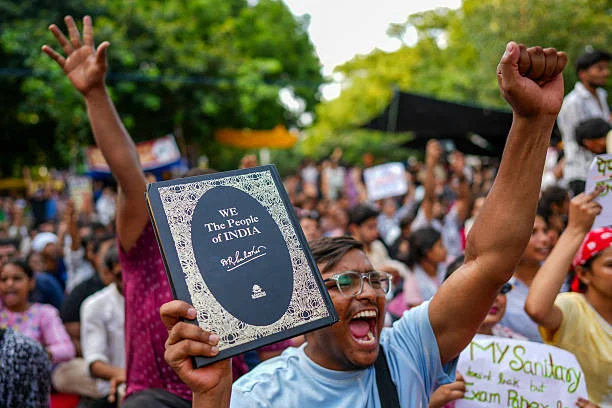
What started as a student-led campaign against alleged irregularities in competitive examinations has grown into one of the most closely watched protest movements in recent Indian politics. The Cockroach Janta Party (CJP), which first drew notice for championing the concerns of students and young people, emerged as the face of a nationwide agitation that pulled in political parties, civil society groups and millions of social media users.
In the process, it pushed education policy, youth unemployment, institutional accountability and the right to protest to the centre of national debate. Whatever one's view of the protesters or of the government's handling of the situation, the CJP-led stir showed just how quickly a local grievance can snowball into a countrywide political reckoning.
This is a look at how the movement took shape, how it spread across the country, how the government and opposition responded to it, and what its long-term political consequences might be.
Why Students Took to the Streets
The roots of the movement lie in a mounting sense of frustration among students over alleged irregularities in competitive examinations. Many aspirants argued that years of preparation were being undone by alleged paper leaks and administrative lapses, and for thousands of them the issue went well beyond any single exam — it reflected a deeper erosion of confidence in the fairness and transparency of India's examination system.
Student organisations initially responded with peaceful demonstrations, calling for greater transparency in how competitive exams are conducted, independent investigations into the alleged irregularities, accountability from officials responsible for administering the tests, and structural reforms to prevent future leaks. These early protests stayed limited in size, but social media quickly amplified their reach, carrying the students' grievances far beyond the campuses where they began.
The Rise of the CJP Movement
As frustration mounted, the Cockroach Janta Party emerged as one of the most visible organisations backing the students' cause. Through online campaigns, public speeches and coordinated demonstrations, it drew in students from across different states, and hashtags related to education reform and accountability soon began trending on multiple social media platforms.
Unlike more traditional political campaigns, much of the movement's momentum came from digital communication: volunteers organised events online, students posted personal accounts of their experiences, videos from protest sites travelled fast, and independent journalists and citizen reporters documented developments as they happened. It was this digital-first approach that allowed the campaign to grow well beyond its original base of aggrieved exam candidates.
From Delhi to a Nationwide Movement
Delhi became the symbolic heart of the protests, with Jantar Mantar serving as a natural rallying point, but demonstrations soon spread to several other states. Students, youth groups, civil society organisations and activists organised marches, sit-ins and public meetings demanding reforms to the education system, and although the scale of participation varied from state to state, the movement as a whole reflected a wider national anxiety over educational opportunity and institutional accountability.
For many who joined in, the protest came to stand for more than examinations alone. It broadened into a wider conversation about youth representation, employment opportunities, government accountability, democratic participation and public trust in institutions — and it was this ability to connect several issues at once that helped it hold public attention for weeks at a stretch.
"The movement became more than an education protest—it evolved into a broader debate on youth participation and democratic accountability."
— Ferox Times
Government Response
The government maintained that it had to balance the need to preserve public order with responding to the concerns students were raising. Police were deployed at major demonstrations, particularly in Delhi, and several protests ended in detentions after participants tried to march beyond designated protest zones or into areas where, authorities said, the necessary permissions had not been granted.
Some episodes involving the use of force by police became flashpoints of public debate. Videos circulating online appeared to show confrontations between police and demonstrators; protesters alleged excessive force in certain instances, while authorities maintained that police had acted only to maintain law and order. These competing accounts of the same events became one of the defining features of the movement, with each side's version circulating widely online.
Government representatives, meanwhile, announced discussions, reviews and administrative measures related to how examinations are conducted, while insisting that investigations into the alleged irregularities would proceed according to law.
Opposition Response
Opposition parties were sharply critical of how the government handled the protests. Several opposition leaders publicly voiced solidarity with the students and demanded greater accountability in the management of examinations, and political pressure on the government intensified through parliamentary debates, press conferences and social media campaigns.
For opposition parties, the unrest offered an opening to highlight broader concerns about governance, youth unemployment and institutional accountability. Government leaders, in turn, accused the opposition of trying to politicise a sensitive issue for electoral gain — a clash of narratives that was, in many ways, simply a reflection of India's fiercely competitive democratic landscape.
The Role of Social Media
One of the defining features of the CJP movement was just how much influence digital platforms came to wield over it. Short videos, livestreams, photographs, eyewitness accounts and independent reporting spread rapidly across social media, and many young Indians ended up following developments directly through these platforms rather than through traditional television news.
Supporters of the movement argued that social media helped bring attention to events that might otherwise have gone unnoticed. Critics countered that the same speed and reach also made it easier for misinformation and unverified claims to spread in an already charged atmosphere. In that sense, the protests illustrated both the power and the pitfalls of digital activism in a modern democracy.
Media Coverage
Coverage of the protests differed considerably from one media organisation to the next. Some outlets focused chiefly on the students' demands and their allegations of examination irregularities, while others gave more weight to concerns about public order, the disruption caused by the demonstrations, and official government statements. Independent journalists, meanwhile, frequently published on-the-ground footage that racked up millions of views online.
That range of coverage was itself a sign of how fragmented India's media landscape has become, with audiences increasingly piecing together the news from multiple sources, each carrying its own editorial slant.
Political Impact
The CJP movement could well leave a lasting mark on Indian politics, in more ways than one. For one thing, it underscored the growing political weight of young voters, with students showing they could organise large-scale campaigns, shape narratives online and drive national conversations largely on their own steam. For another, it pushed education policy back into the national spotlight, turning issues such as examination security, institutional transparency and administrative accountability into central themes of political debate.
The episode may also push political parties across the spectrum to pay closer attention to youth-focused policies, given how clearly students have shown themselves to be a significant electoral constituency. And more broadly, it offered a fresh demonstration of how social media has reshaped political mobilisation — modern movements, it turns out, can grow rapidly without leaning on the traditional organisational structures parties once considered essential. Whether that becomes the norm for future political campaigns remains to be seen.
Challenges and Criticism
Like most large public movements, the CJP-led protests did not escape criticism. Some observers questioned aspects of the movement's leadership and strategy, while others argued that certain demonstrations disrupted everyday public life. Supporters pushed back, arguing that peaceful protest is a fundamental democratic right and that sustained public pressure is often what it takes to bring about institutional reform.
At the same time, fact-checkers repeatedly cautioned against taking viral claims at face value, stressing the need to verify videos and information before drawing conclusions from them — a reminder of just how complicated political activism has become in the digital age.
Even though the immediate phase of the protests has passed, the broader issues they raised have not gone away. Students continue to press for greater transparency, education reforms remain under public discussion, and political parties are likely to keep addressing youth concerns in the campaigns ahead. Whether the movement eventually translates into lasting institutional reform will depend on the policy decisions that follow, how they are implemented, and whether public engagement is sustained.
What began as a student movement, in the end, grew into a national political event — one that reignited debates about education, governance, accountability, media and democracy itself. Regardless of political affiliation, the CJP protests demonstrated just how capable India's youth have become of shaping national conversations, through both street demonstrations and digital platforms.
The movement's long-term significance will not be measured by the protests alone, but by whether they lead to meaningful reforms that strengthen public trust in educational institutions and in democratic processes more broadly. As India continues to wrestle with questions of education, employment and governance, the legacy of the CJP movement seems set to remain part of the country's political conversation for years to come.
Latest News
- Drone Crashes Near Itamar Ben-Gvir's Residence in Hebron
- Ukraine Claims Russia Preparing to Deploy 30,000 North Korean Troops
- UK Inquest Rules Saudi Prince's Death a Misadventure in London
- Muzaffarnagar Girl Dies by Suicide After School Humiliation
- Supreme Court Restricts Sharing of Court Hearing Recordings
- 19-Year-Old Protester May Lose Vision After Alleged Pellet Injury
- Supreme Court Declines Urgent Hearing on Student Protest Plea
- 10 Dead, 15 Trapped in Sikkim NHPC Tunnel Blast
- Media Propaganda: How It Shapes Public Opinion
- Meta Outage Today: Facebook, Instagram and Threads Down for Thousands Worldwide