Supreme Court Bars Unauthorised Sharing of Court Hearing Videos, Says News Reporting Will Not Be Affected
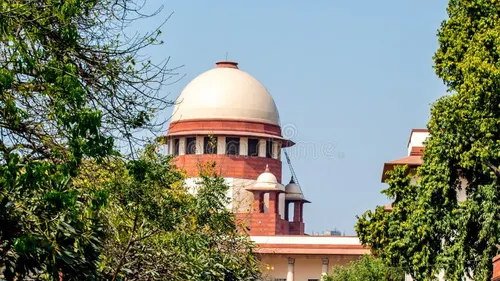
New Delhi, July 24, 2026: The Supreme Court on Friday barred the unauthorised extraction, modification, dissemination, posting, re-posting, uploading or monetisation of audio and video recordings of judicial proceedings on social media and other digital platforms, ruling that such use will now require prior clearance from the concerned court.
A Bench comprising Chief Justice of India Surya Kant, Justice Joymalya Bagchi and Justice V. Mohana passed the interim order, holding that official recordings of court hearings cannot be circulated online unless permission has been obtained from the appropriate authority.
"There shall be no extraction, modification, dissemination, posting, re-posting, uploading or monetisation of audio/video recordings of the judicial proceedings on social media or other digital platforms without the prior permission of the Registrar General of the concerned High Courts or the Secretary General of the Supreme Court," the Bench directed.
For recordings of Supreme Court proceedings, permission will now have to be sought from the Secretary General of the Supreme Court. Anyone wishing to use recordings of High Court proceedings must instead approach the Registrar General of the concerned High Court.
The Bench was careful to clarify that the order does not extend to news reporting. Journalists and media organisations, it said, can continue to report on court proceedings, hearings, judicial observations and judgments as before, in keeping with existing legal and ethical standards. What the order restricts, the Court made clear, is the unauthorised use of official audio and video recordings on social media and digital platforms — not reportage itself.
The directions came during the hearing of a Public Interest Litigation seeking guidelines to check the misuse of courtroom recordings online. The petition had argued that edited or selectively clipped videos of court proceedings were being widely circulated on social media, often stripped of context, in ways that could mislead the public and undermine the dignity of judicial proceedings. It had also flagged the growing practice of individuals and digital platforms monetising such content.
Significantly, the petitioner did not object to the live-streaming of proceedings itself, but sought safeguards against the unauthorised editing, redistribution and commercial exploitation of recordings once they were made available.
Alongside the interim order, the Supreme Court issued notices to all High Courts, asking them to submit reports on how live-streaming of proceedings has been implemented so far and what impact it has had. The Union Government has been directed to identify the ministries that should be involved in framing a regulatory mechanism for such recordings, while notices have also gone out to major social media platforms as the case proceeds.
The directions passed on Friday are interim in nature and will remain in force until the Supreme Court orders otherwise. The matter will continue to be heard as the Court weighs the need for comprehensive guidelines to govern the use and dissemination of courtroom recordings in the digital age.
Latest News
- Muzaffarnagar Girl Dies by Suicide After School Humiliation
- 19-Year-Old Protester May Lose Vision After Alleged Pellet Injury
- Supreme Court Declines Urgent Hearing on Student Protest Plea
- 10 Dead, 15 Trapped in Sikkim NHPC Tunnel Blast
- Media Propaganda: How It Shapes Public Opinion
- Meta Outage Today: Facebook, Instagram and Threads Down for Thousands Worldwide
- NEET Paper Leak, Public Protests & India's Accountability Crisis
- Rohit Sharma, Kohli & Jadeja: India's 2027 World Cup Transition
- Kudankulam Nuclear Plant Data Leak: India Launches Probe
- EU Deepens Ukraine Defence Partnership Amid Russian Threat