Israel Plans Space Weapons to Strike Targets on Earth, Defense Program Reveals
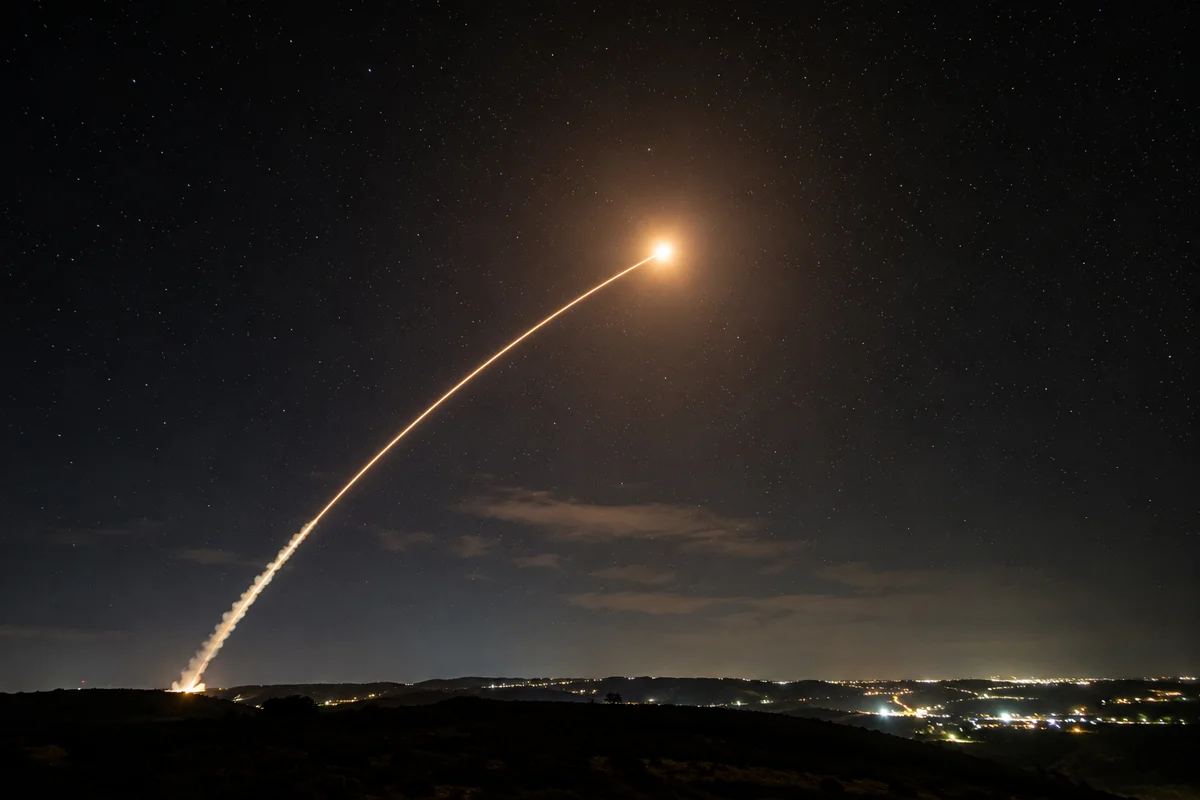
Israel is preparing to expand its military capabilities in outer space under a multiyear defense plan that includes the development of offensive space systems, among them weapons reportedly designed to strike targets on Earth from orbit.
The plan was reported by The Jerusalem Post on August 24, 2026, as part of a broader multiyear budget program being developed by Israel's Ministry of Defense for the country's space sector. The program includes a dedicated budget for offensive space activity, alongside efforts to expand intelligence collection from space and strengthen military communications, according to the report.
The offensive program has two main elements, the Jerusalem Post reported. One involves developing systems intended to protect Israeli satellites from hostile spacecraft. The other involves developing weapons capable of striking targets on Earth from space, with the stated purpose of both strengthening Israel's defensive capabilities and enabling attacks against hostile actors. Israel's Directorate of Defense Research and Development, known as MAFAT, along with the Israel Defense Forces and Israeli defense industries, are involved in the planning and development process, the report said.
Beyond the offensive systems, the Defense Ministry is seeking to improve Israel's ability to collect intelligence from space continuously, including across different locations and under different weather conditions. The plan also calls for broad, resilient and continuous communications capabilities for the defense establishment.
The plan follows a series of statements by Israeli Defense Minister Israel Katz outlining a more ambitious role for space in the country's military strategy. In June, Katz said Israel was seeking to become a global leader in space-attack capabilities and that the country was recruiting leading scientific and technological experts to help develop them. He argued that gaining such an advantage could strengthen Israel's deterrence and its ability to attack and destroy enemy capabilities.
On June 29, Katz specifically discussed the development of space-based laser systems, saying Israel was developing lasers capable of carrying out attacks above the Earth and describing the effort as a major strategic priority. The Jerusalem Post reported that Katz said Israel should become the leading country in the world in this capability. CTech also reported that Katz was presenting offensive space technology as part of a broader long-term military strategy.
The two developments should not be treated as identical. Katz's June remarks referred specifically to space-based laser technology, while the Defense Ministry plan reported in August describes a wider category of offensive space capabilities, including weapons intended to strike targets on Earth from space. Public reporting has not disclosed the precise design or technology that would be used for the broader Earth-targeting capability.
One of the most important distinctions in the reporting is between development and deployment. Available reporting does not establish that Israel currently has a deployed, operational weapon in orbit capable of striking targets on Earth; instead, the reports describe a planning and research-and-development effort backed by a proposed multiyear budget, with no public information identifying the exact weapon, its range, launch platform, deployment schedule or operational readiness. Although Katz has spoken specifically about space-based lasers, it would be premature to describe every element of the new program as a confirmed laser weapon system. The most accurate description, based on available reporting, is that Israel is pursuing offensive space capabilities, with space-based lasers among the technologies its defense minister has publicly discussed.
The new ambitions build on an established military space infrastructure. Israel's Ofek satellite family provides intelligence and surveillance capabilities for the defense establishment; the Ofek 19 satellite, launched in September 2025, uses synthetic-aperture radar technology, and the Ofek 13 and Ofek 19 programs were recognized in the 2026 Israel Defense Prize for their contribution to military operations, the Defense Ministry has said. The ministry has also credited space-based capabilities used during Operation Roaring Lion, saying in July 2026 that Israel had employed "unprecedented" capabilities from space during the war and was simultaneously addressing immediate operational needs and planning its space capabilities for the next 20 to 30 years. The Jerusalem Post reported that satellite-based intelligence collection and target development during that operation accelerated the push to expand Israel's military space capabilities.
Israel's plans come as major military powers increasingly focus on counter-space and anti-satellite capabilities. A separate analysis published on August 25 by Globes and carried by The Jerusalem Post examined the growing international competition over anti-satellite weaponry. The report said space warfare systems could threaten satellites and potentially disrupt imagery, communications and other technologies that depend on space infrastructure. It cited U.S. Space Command commander Gen. Stephen Whiting, who has said that developing anti-satellite capabilities is a high U.S. priority because such systems could be important for deterrence and responding to attacks.
The issue is not limited to Israel or the United States. Russia and China have previously demonstrated counter-space technologies and, on separate occasions, have conducted activities involving attacks on or destruction of space objects, according to reporting on the broader counter-space landscape rather than any Israeli program specifically; that history provides context for assessing Israeli statements about becoming a leader in space warfare. In June, Katz said that no country had the ability to conduct attacks in space, a statement that should be understood as referring to the particular capability Israel is seeking rather than as evidence that no country has demonstrated any counter-space capability.
The push into offensive space capabilities is also drawing broader regional reaction, separate from any confirmation of Israel's specific program. On August 10, Iran's ambassador and permanent representative to the U.N. in Geneva, Ali Bahreini, warned at the Conference on Disarmament that the development of U.S. military and offensive space capabilities could encourage other countries to develop counter-capabilities and intensify an arms race in space, according to remarks reported by the Jerusalem Post on August 22. The warning comes as Iran itself continues efforts to expand its own space program, including satellites, space infrastructure and satellite data and imagery services, according to earlier reporting cited by the Jerusalem Post.
The concern over a potential arms race is also reflected in ongoing international discussions. The United Nations' Open-ended Working Group on preventing an arms race in outer space held its third session in Geneva from July 6 to 10, 2026, with another session scheduled for November. The European Union has also stressed the need to prevent an arms race and uncontrolled escalation in outer space.
The legal position is more complicated than a blanket prohibition on weapons in space. The 1967 Outer Space Treaty prohibits placing nuclear weapons or other weapons of mass destruction in orbit or stationing them in outer space, and it establishes restrictions on military activities on celestial bodies. It does not, however, impose a blanket prohibition on every conventional military capability in Earth orbit. As a result, the legal implications of future Israeli systems would depend on the technology involved, where it is deployed and how it is used. The existence of a development program does not by itself establish a violation of the Outer Space Treaty.
The latest reporting indicates that Israel is pursuing a broader military-space strategy rather than a single publicly identified weapon. The strategy includes improved space-based intelligence, more resilient military communications, protection of Israeli satellites against hostile spacecraft and the development of offensive capabilities that could potentially strike targets on Earth from space. Space-based lasers are a separately stated area of development that Katz has publicly highlighted.
Israel's Space Directorate has emphasized the need to establish what it describes as security superiority in space. According to the Jerusalem Post's August 24 report, Space Directorate chief Avi Berger said Israel needs greater freedom of action in space so it can create additional effects against targets in different geographic areas, language that suggests a strategic objective extending beyond satellite surveillance.
Significant details remain undisclosed despite the growing number of Israeli statements. There is no publicly identified name for the proposed Earth-targeting weapon. Its exact mechanism is unknown, as are its range, power, orbital location, launch system and expected deployment timeline. Public reporting also does not establish whether the proposed capability would be permanently stationed in orbit or would rely on another type of space-based platform. For that reason, descriptions such as "Israel has deployed space weapons capable of attacking Earth" would go beyond the available evidence.
The verified position as of August 27, 2026, is that Israel is planning and developing offensive space capabilities under a multiyear Defense Ministry program. That program reportedly includes systems designed to defend Israeli satellites and weapons capable of striking targets on Earth from space, while Israeli officials have separately confirmed an ambition to develop space-based laser capabilities.
Israel's move comes at a time when satellites have become increasingly important to modern warfare and when major powers are investing in technologies designed to protect, disrupt or attack space-based assets. For Israel, the experience of recent military operations appears to have reinforced the strategic value of space-based intelligence and communications, and the country is now seeking to extend those capabilities into a broader military architecture that could include both defensive counter-space systems and offensive weapons.
If the program progresses from research and development to operational deployment, it could mark a significant expansion of Israel's military reach and add another dimension to an already competitive security environment in outer space. For now, Israel has announced and is developing offensive space capabilities, but there is no public confirmation that an operational space-to-Earth strike weapon has already been deployed.
Latest News
- Meta, States in Settlement Talks Over Teen Safety Trial
- Greater Israel: How Ideology Is Becoming Facts on the Ground
- BJP, Meta and India’s Growing Power Over Online Content
- USCIRF Seeks Sanctions on RSS Ahead of Mohan Bhagwat’s US Visit
- Gaza Death and Injury Toll Exceeds 11% of Pre-War Population
- Humanoid Robots Could Patrol U.S. Southern Border
- Ukraine Corruption Concerns Put Pressure on EU Accession
- Hefner Contacted FBI Over Epstein in 2005, Lawsuit Says
- Five Shot Near Virginia State University Dorms; One Critical
- South Korea’s Lee Calls for North Korea Peace Talks