Syrian Court Sentences Former President Bashar al-Assad to Death in Absentia
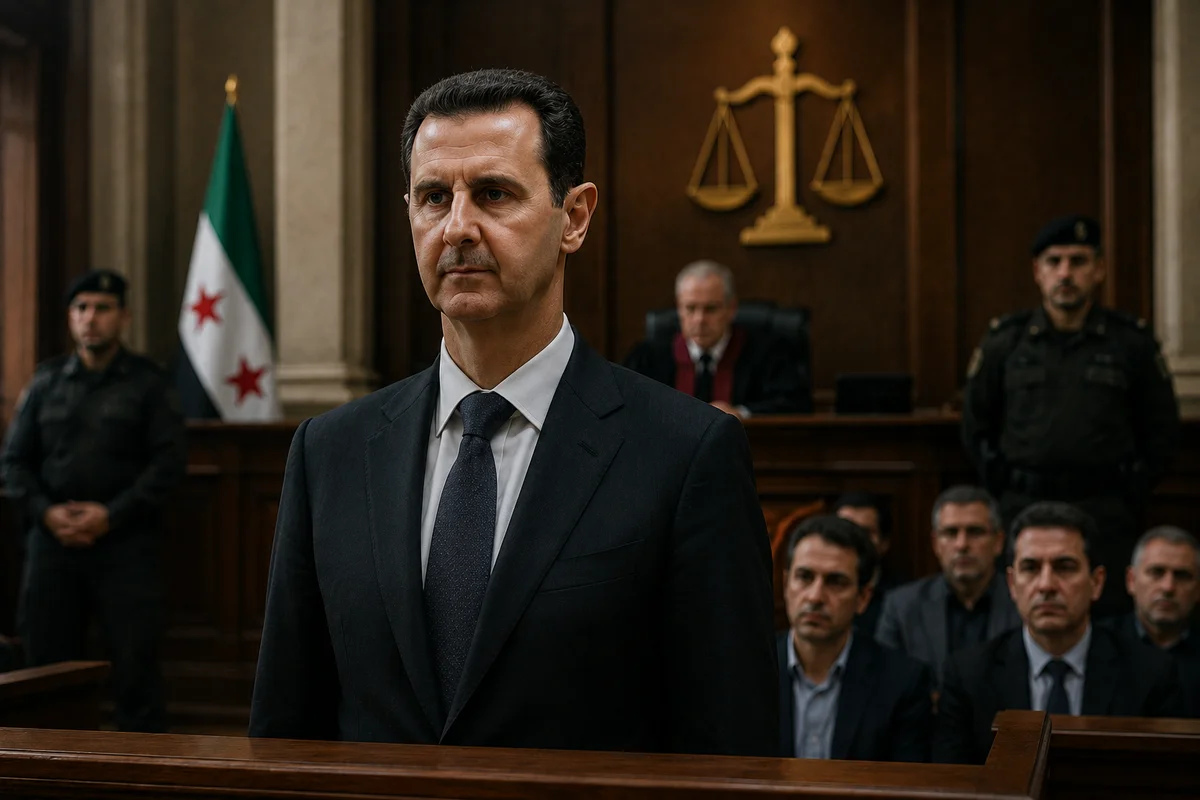
DAMASCUS, Syria, Aug. 11, 2026 : A Syrian court on Tuesday sentenced former President Bashar al-Assad to death in absentia in a landmark case involving allegations of war crimes and crimes against humanity committed during the country's 14-year conflict. The court also sentenced Assad's younger brother, Maher al-Assad, and his maternal cousin, Atef Najib, to death. The conflict is estimated to have killed about 500,000 people.
Bashar al-Assad and Maher al-Assad were not present when the sentences were announced. Both fled Syria after the collapse of Assad's government in December 2024 and are understood to be living in Russia.
Atef Najib, however, was present in court. The former Syrian army brigadier general appeared in a prisoner's uniform inside a cage as the judge read the sentence under tight security. Najib previously headed the Political Security Branch in Daraa province in southern Syria.
Najib's case is closely linked to events that unfolded in Daraa in 2011, when protests against Assad's government erupted and later spread across Syria. He was accused of involvement in the violent suppression of early protests in Daraa. His trial included allegations concerning killings, torture, the suppression of peaceful demonstrations and abuses against detainees, including minors. Najib has denied the charges.
His prosecution was particularly significant because it was the first major national criminal proceeding against a senior Assad-era security official after the fall of the former government. Proceedings began before Damascus' newly created Fourth Criminal Court on April 26, 2026.
Bashar and Maher al-Assad were tried in absentia because they remain outside Syria. The former president ruled Syria from 2000 until his government collapsed in December 2024. After the fall of Damascus to opposition forces, Assad left the country and went to Russia, where he was granted asylum.
The death sentence does not mean that Assad has been arrested or executed. His continued presence outside Syrian custody creates a major obstacle to enforcing the sentence.
The verdict represents one of the most significant judicial actions against senior figures from the former Assad government since the regime's collapse. The Fourth Criminal Court has been designated to hear cases connected to Syria's transitional-justice process, and Najib's trial was closely watched by Syrian victims and rights groups seeking accountability for abuses committed during the former government's rule.
The proceedings have also raised legal questions. Syrian human-rights organizations and legal experts have pointed out that the country's existing criminal law does not comprehensively define crimes against humanity and war crimes as separate domestic offenses, and a specialized legal framework for transitional justice has been discussed but has not fully resolved these concerns.
That means the case matters not only because of the sentences but also because it could shape how Syria prosecutes alleged abuses committed during the Assad era.
Bashar al-Assad inherited the presidency from his father, Hafez al-Assad, in 2000. His government faced a nationwide uprising beginning in 2011 that developed into a devastating conflict involving Syrian government forces, opposition groups, Kurdish forces and armed extremist organizations, alongside military intervention by foreign powers.
Over the course of the conflict, hundreds of thousands of people were killed and millions were displaced. International investigations and human-rights organizations documented widespread allegations of unlawful killings, torture, arbitrary detention and enforced disappearances.
Assad's rule ended in December 2024, when opposition forces captured Damascus and his government collapsed.
The immediate enforcement of the sentence remains uncertain because Assad is outside Syria. For Syrian authorities to carry it out, he would first have to come under their custody, and his presence in Russia makes that prospect highly uncertain. Any future attempt to enforce the verdict could become a major diplomatic and legal issue.
Still, Tuesday's ruling marks a major moment in the country's post-Assad accountability process. It places the question of justice for victims of the former regime at the center of Syria's transition, while also testing whether the country can establish a judicial process capable of addressing the enormous scale of alleged abuses committed during the conflict.
Latest News
- Greater Israel: How Ideology Is Becoming Facts on the Ground
- BJP, Meta and India’s Growing Power Over Online Content
- USCIRF Seeks Sanctions on RSS Ahead of Mohan Bhagwat’s US Visit
- Gaza Death and Injury Toll Exceeds 11% of Pre-War Population
- Humanoid Robots Could Patrol U.S. Southern Border
- Ukraine Corruption Concerns Put Pressure on EU Accession
- Hefner Contacted FBI Over Epstein in 2005, Lawsuit Says
- Five Shot Near Virginia State University Dorms; One Critical
- South Korea’s Lee Calls for North Korea Peace Talks
- Cristiano Ronaldo Marries Georgina Rodriguez in Portugal