Greater Israel: Is an Old Ideology Becoming a Reality on the Ground?
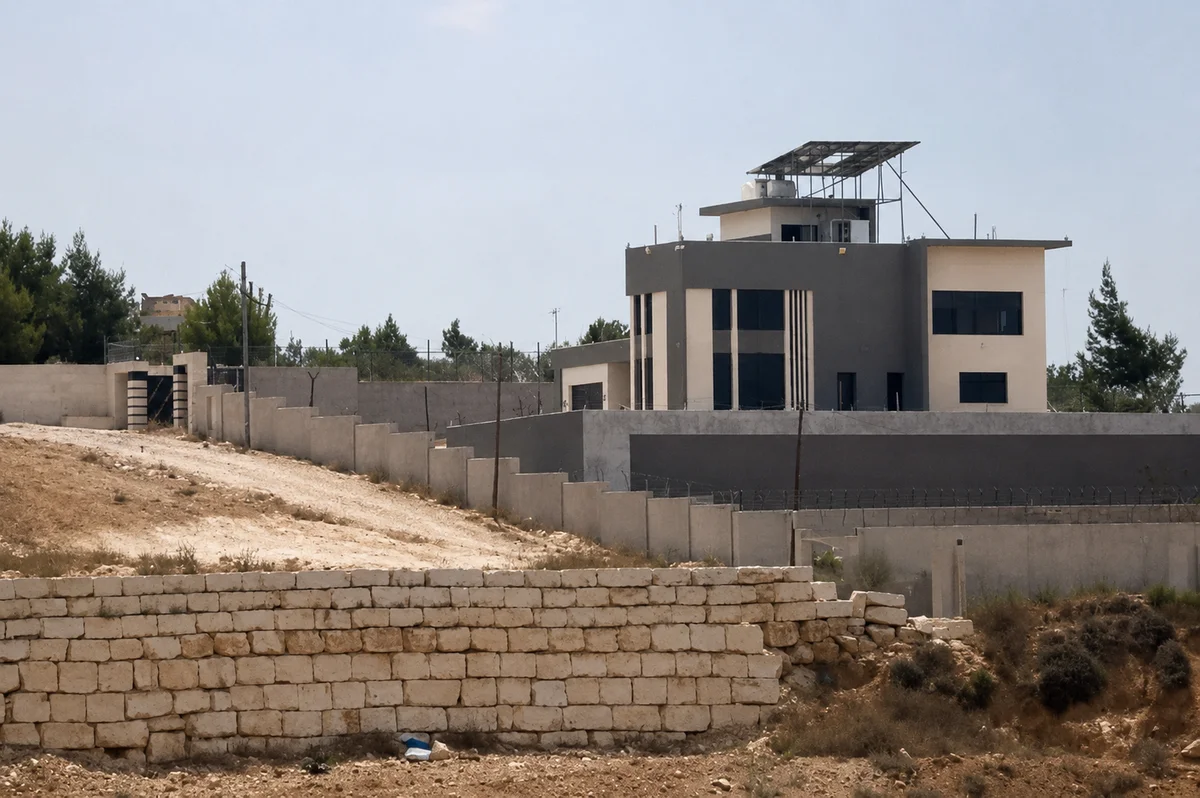
Settlement expansion and a new land-registration regime in the West Bank are producing measurable changes to the territory's physical and legal landscape, while Israel's continued military presence in southern Lebanon is creating a separate and unresolved territorial question. Israel denies pursuing any unified plan of conquest. The clearest evidence lies not in declared intent, but in what is being built, registered and held.
Gaza has experienced extensive destruction and mass displacement. The West Bank is being reshaped, parcel by parcel, through settlement approvals and a land-registration process unseen since 1967. Israeli forces remain in parts of southern Lebanon under a security arrangement tied to Hezbollah's disarmament. Syria has become a theater where Israeli, Turkish and Iranian interests collide. In Washington, Tehran and Ankara, officials are watching all of it, trying to determine whether these are separate crises or the outline of something larger.
The phrase "Greater Israel" carries a specific historical weight, a maximalist vision, rooted in early twentieth-century Zionist thought, of a Jewish state stretching across much or all of the historic Land of Israel. No Israeli government has formally adopted a single, universally defined "Greater Israel" territorial blueprint as state policy. Israeli officials, when pressed, describe their actions in the West Bank, Gaza, Lebanon and Syria as security measures, not conquest. That distinction matters, and this article does not erase it.
But distinctions between ideology and policy do not settle the deeper question. Settlement approvals in the West Bank are not abstractions. They are housing units, roads and land registries that outlast any single government. Displacement figures are not rhetoric. They are people who no longer live where they lived a year ago. The International Court of Justice, in an advisory opinion that Israel rejects, has already concluded that specific Israeli policies and practices amount to annexation of parts of the Occupied Palestinian Territory.
The question this article asks is not whether Israel has declared a Greater Israel. It has not. The question is whether a set of distinct, separately justified policies in the West Bank, in Gaza, in Lebanon, in Syria, are cumulatively producing a territorial reality that resembles elements of that old ideology, whether or not any Israeli official ever uses the phrase.
By June 2026, Gaza's Health Ministry had reported more than 73,000 Palestinian deaths since the war began. Reuters and the Associated Press have reported that figure while attributing it explicitly to Gaza health authorities. Neither agency, nor this article, treats it as independently verified, because no independent body has verified it.
The humanitarian collapse behind that number is documented more granularly. OCHA reported in June 2026, based on information collected in March, that most households in Gaza were unable to meet the minimum needs of six litres of water per person per day for drinking and cooking. Partners leading on water reported that overall water production in Gaza had fallen by about 20 percent in May compared with two months earlier, largely because of shortages of chemicals and spare parts. By July, humanitarian partners were trucking drinking water to 2,707 collection points, delivering roughly 20,368 cubic metres per day to 1.6 million people, enough, by OCHA's accounting, to provide at least six litres per person per day through that specific response, though not through the water system as a whole.
Gaza's wastewater and sewage infrastructure has sustained extensive damage over the course of the war. Reuters has reported displaced Gazans resorting to polluted seawater because of inadequate access to clean water and the state of that damaged infrastructure. Separately, the World Health Organization reported at an earlier point in the war that only 14 of Gaza's 36 hospitals were functioning, and only partially. That figure belongs to that earlier reporting period. It should not be read as a snapshot of August 2026 conditions, and a comparable, independently verified August 2026 figure was not identified for this article.
These are distinct categories of harm, and collapsing them into a single narrative obscures rather than clarifies what has happened. There is destruction caused directly by military operations. There are restrictions on the movement of people, goods and aid. There is the slower, cumulative collapse of infrastructure, water systems, sewage networks, hospitals, that were never designed to survive prolonged conflict. There is displacement, repeated and often multiple times for the same families. There are shortages of humanitarian aid relative to need. And there are two competing sets of justification: Israel's military rationale for its operations and restrictions, and Palestinian and humanitarian accounts of their effects.
It would be inaccurate to state, as a blanket fact, that Israel deliberately cut off all water and electricity to Gaza's population. No source reviewed for this article establishes that as a proven, singular intent behind the full scope of the humanitarian crisis. What the record does establish, through OCHA, WHO, Reuters and AP reporting, is a humanitarian catastrophe of severe and sustained scale, produced through the combined effects of military operations, access restrictions and severe infrastructure damage, although the relative contribution of each factor remains contested.
Before assessing whether current policy resembles this ideology, the ideology itself needs defining, and it resists a single definition.
The term draws on the concept of Eretz Yisrael, the Land of Israel, a designation with roots in biblical text describing territory promised to the Israelites. That religious and historical concept has been interpreted with wildly different geographic scope by different movements across more than a century of Zionist thought, from borders resembling the modern state of Israel to maximalist readings stretching from the Nile to the Euphrates.
Revisionist Zionism, the movement founded by Ze'ev Jabotinsky in the 1920s, argued for Jewish sovereignty over the full territory of the British Mandate for Palestine, including both banks of the Jordan River. Jabotinsky's ideas influenced later Israeli political movements, including the Likud party's ideological lineage, though Likud governments in practice have pursued policies far short of Jabotinsky's original territorial claims.
After Israel's capture of the West Bank, East Jerusalem, Gaza, the Sinai Peninsula and the Golan Heights in the 1967 war, a religious-nationalist settlement movement emerged that framed Jewish settlement in the newly occupied territories, particularly the West Bank, which many religious nationalists refer to by the biblical names Judea and Samaria, as a theological and national imperative. This movement, most visibly represented by groups such as Gush Emunim in the 1970s, provided much of the ideological infrastructure for the settlement enterprise that continues today.
Academic research on Zionist cartography confirms that maps depicting an expanded "Land of Israel" have circulated among various Zionist organizations and political movements at different points, with varying and sometimes conflicting boundaries. There has never been a single, universally accepted definition of "Greater Israel," not among historians, not among Israeli political movements, and not within Israeli government policy at any point in the state's history. The maximalist "Nile to Euphrates" formulation in particular has never been established as official Israeli government policy by any reliable primary source, and this article does not treat it as one.
Whatever "Greater Israel" meant as pure ideology before 1967, the Six-Day War transformed it into a live political question, because it gave Israel physical control over territories central to those older visions.
Israel's capture of the West Bank, including East Jerusalem, Gaza, the Sinai Peninsula and the Golan Heights created an immediate and unresolved distinction between Israel's internationally recognized pre-1967 borders and the territories occupied that year. Sinai was later returned to Egypt under the 1979 peace treaty. Gaza, Golan, East Jerusalem and the West Bank followed different trajectories.
Settlement policy in the West Bank began within years of the 1967 war and has continued, in varying forms and under governments across the Israeli political spectrum, ever since. Over decades, that policy produced not just settlements but the infrastructure connecting them: bypass roads, security corridors and military zones that fragment Palestinian territory and, in the view of Israeli security planners, provide strategic depth and control.
Central to this is Area C, the roughly 60 percent of the West Bank that, under the Oslo Accords' interim territorial division, remains under full Israeli civil and military control. Area C contains the overwhelming majority of West Bank settlements and much of the land now subject to the registration process described below. Its status was meant to be temporary, pending a final-status agreement. More than three decades after Oslo, no such agreement exists, and by many analysts' assessment, Area C's "interim" designation has become, in practical terms, close to permanent.
This is where the evidentiary record is strongest, and most specific.
On 3 June 2026, Israel's Higher Planning Council advanced plans for 2,162 housing units across three West Bank settlements: 1,006 units near Jerusalem, in the Gvaot area; 922 units near Nablus, in the Har Bracha area; and 234 units in Kiryat Arba, near Hebron. Reuters reported that Finance Minister Bezalel Smotrich, who holds significant authority over settlement policy within the Israeli government, said the move would strengthen Israel's hold on the territory and prevent the creation of a Palestinian state.
That statement should be read as exactly what it was: an attributed political claim by a specific minister with a specific policy agenda, not an official declaration of Israeli state doctrine. Other members of Israel's government, and Israel's official position in international forums, do not universally frame settlement policy in those terms. Smotrich's remarks are significant because of his institutional authority over planning decisions, not because they constitute Israeli law or formal state policy.
On 14 July 2026, Israel's security cabinet approved 1.3 billion shekels, approximately $434 million, for establishing 34 new settlements in the occupied West Bank. Reuters reported that an additional 1.075 billion shekels was earmarked specifically for infrastructure, particularly road construction connecting settlements, and that the initiative brought the total number of settlements initiated during Smotrich's four-year tenure to 103.
These figures describe several distinct things that are often, incorrectly, treated as interchangeable. A housing-unit approval is a planning decision permitting construction; it does not mean units are built or occupied. Settlement establishment is a formal legal and administrative act recognizing a new settlement, distinct from expanding an existing one. Infrastructure funding pays for roads and utilities that often serve strategic and connective functions beyond any single settlement. Outposts are unauthorized under Israeli law even when tolerated or later retroactively legalized, distinct from settlements built with full government authorization from the outset. Conflating these categories, treating every planning approval as equivalent to a new town, or every outpost as identical to a state-sanctioned settlement, produces a distorted picture in either direction. The distinctions matter because they describe different stages of a process, each with different legal and practical significance.
Approximately 700,000 Israeli settlers are reported to live in the West Bank and East Jerusalem combined, according to widely cited demographic estimates drawn from Israeli and international sources tracking settlement growth.
That figure should be treated as an informed current estimate rather than a precise census count. Settler population figures are compiled from multiple sources, including Israeli municipal data and settlement-monitoring organizations, and methodologies vary. What is not in dispute is the trajectory: the settler population has grown substantially and consistently since the 1970s, through governments of differing ideological character, alongside roughly 2.7 million Palestinians in the West Bank and East Jerusalem, living under a patchwork of Israeli military and Palestinian Authority civil administration.
On 15 February 2026, Israel's cabinet approved a new land-registration process for the occupied West Bank, including Area C, a process that had not been systematically carried out there since the 1967 occupation began.
Reuters reported that the measures were intended to tighten Israeli administrative and legal control over West Bank land and to make it procedurally easier for Israeli settlers to purchase land within the territory. Palestinian officials and international watchdog organizations described the move as a form of de-facto annexation, arguing that formalizing land registries under Israeli civil authority, in territory whose final status remains legally unresolved, entrenches Israeli control regardless of how the policy is officially characterized. Israeli officials presented the policy as a legal and administrative reform intended to establish clearer and enforceable property rights in a territory long defined by disputed and undocumented land claims.
It would be inaccurate to state that every parcel of land lacking Ottoman-, Jordanian- or Israeli-era documentation automatically becomes Israeli state property under this process. That is not how the registration mechanism works, based on available reporting. What the process does is establish a formal mechanism through which ownership claims must be documented and adjudicated, a mechanism operating within a complex land-registration system shaped by Ottoman, British, Jordanian and Israeli administrative legacies, one that, critics argue, structurally disadvantages Palestinian landholders who often lack the specific paperwork the process now requires, and that could, over time, facilitate the loss of land whose Palestinian ownership was never formally registered under any prior administration. Whether that fear translates into large-scale dispossession will depend on how the process is implemented in the years ahead, a question the available record cannot yet answer.
The UN's OCHA has tracked West Bank displacement with a level of granularity that allows for precise, dated figures, and precision here matters, because different reporting periods produce different totals that should not be merged.
In its 10 July 2026 reporting, OCHA documented that more than 3,200 Palestinians had been displaced during 2026 by settler attacks and by demolitions carried out for lack of Israeli-issued building permits, an average of more than 17 people per day. Within that same report, OCHA separately noted a narrower figure of more than 2,300 people displaced during the specific reporting window the July update covered, a subset drawn from within the broader 2026 total, not an additional figure on top of it, and one this article flags for readers to hold apart from the year-to-date 3,200 figure rather than add together. Separately again, and covering a much longer span, OCHA has documented that more than 6,200 Palestinians, including more than 3,000 children, have been displaced in this context since January 2023, a cumulative figure spanning more than three years, not a 2026-specific one. These three figures come from the same OCHA reporting series but describe three different time windows, and this article treats them as such rather than summing them.
OCHA has also documented entire communities experiencing full or partial displacement as a result of settler attacks, movement restrictions and related pressures that make continued residence untenable even without a formal demolition order. By the end of July, OCHA had documented more than 1,360 settler-related incidents in the West Bank during 2026, affecting more than 250 Palestinian communities, while about 900 Palestinians had been injured in settler attacks over the same period.
A separate August 2026 analysis by the Israeli human-rights organization Yesh Din found that a growing share of recorded settler-violence incidents was occurring in Areas A and B, where the Palestinian Authority has greater administrative responsibility, rather than concentrated in Area C as in previous years. Yesh Din argues that this represents an expansion of settler pressure beyond Area C and into areas deeper within Palestinian-administered territory. That interpretation is the organization's assessment, not an independently established finding that the Israeli government has adopted such a strategy, and this article treats it accordingly.
A pattern emerges from this documentation, though it should be described as an analytical framework rather than a fixed sequence that every case follows: settler violence or access restrictions can erode a community's ability to sustain agricultural or pastoral livelihoods; that economic pressure, combined with formal demolition of structures lacking Israeli permits, permits that Palestinian applicants in Area C are, in practice, rarely granted, can result in displacement; and displacement, repeated across multiple communities, can fragment what remains of contiguous Palestinian territory. Not every displaced family or community experienced each stage of this sequence in this order. But the pattern recurs often enough, across enough OCHA-documented cases, to be treated as a meaningful description of how demographic change is occurring in parts of the West Bank.
In August 2026, the West Bank village of Qusra, near Nablus, became a focal point for exactly this dynamic, and is worth examining in detail rather than treating as representative of every incident.
Residents reported that settlers besieged Palestinian homes in the village, with some residents saying they were prevented from leaving the area. Residents reported that access to water and electricity was disrupted during a confrontation that continued for more than a week while Israeli forces were deployed in the area. Reuters reported on the confrontation. U.S. Ambassador to Israel Mike Huckabee publicly condemned the settlers' actions.
The available reporting does not establish that the Israeli government ordered or directed the siege. Residents' accounts and news-agency reporting describe the siege as an action by settlers, while Israeli security forces intervened during the standoff but did not immediately end the confrontation. That distinction, between what settlers did and what the state directed, is significant, and this article does not collapse it.
What Qusra demonstrates, on the available record, is not a government policy but a pattern of settler power operating with a degree of practical latitude, a state security apparatus that intervened during the standoff while the siege continued for more than a week, and a Palestinian community left vulnerable in the interim. Whether that latitude reflects tacit tolerance, resource constraints, policy priorities, or some combination of the three is a question the Qusra case alone cannot answer. It does, however, illustrate concretely how the broader displacement pattern described above can play out for a specific community.
Any assessment of the trajectory of settlement expansion and displacement should account for a detailed report from the UN Human Rights Office covering the period from 1 November 2023 to 31 October 2024, figures that belong specifically to that twelve-month window and should not be conflated with 2026 data cited elsewhere in this article.
For that reporting period, OHCHR documented 1,779 Palestinian structures demolished in the West Bank for lack of building permits, and 4,527 Palestinians forcibly displaced as a result of those demolitions. Citing Israeli NGOs tracking settlement activity, the report found that more than 20,000 housing units in East Jerusalem settlements were advanced or planned during the period, alongside more than 10,300 settlement units in the pipeline elsewhere in the West Bank. It documented 49 new Israeli outposts established during the reporting year, and found that 612 Palestinians were killed by Israeli security forces and settlers over the same period.
Read alongside the 2026 figures in the preceding sections, this earlier reporting period establishes that the trends described here, settlement expansion, demolitions, displacement, settler violence, are not a sudden 2026 development. They describe a trajectory that OHCHR had already documented at scale a year or more earlier, which the 2026 evidence largely continues rather than initiates.
On 19 July 2024, the International Court of Justice issued an advisory opinion addressing the legal status of Israel's presence in the Occupied Palestinian Territory, an opinion that predates, but frames, everything documented above.
The Court found that Israel's continued presence in the Occupied Palestinian Territory is unlawful, and that Israel is under an obligation to bring that presence to an end as rapidly as possible. It found that Israel must immediately cease all new settlement activity and must repeal legislation and measures that create or maintain the unlawful situation it identified. The Court found that Israeli policies and practices, including settlement construction, associated infrastructure, and exploitation of natural resources in the territory, were designed to remain in place indefinitely and to create irreversible effects on the ground, entrenching Israeli control. On that basis, the Court found that these policies and practices amount to annexation of large parts of the Occupied Palestinian Territory. The Court's annexation finding, however, concerned the effects of these policies and practices in the Occupied Palestinian Territory, particularly East Jerusalem and the West Bank; it should not be read as a judicial finding that Israel has an established programme to annex Gaza. The opinion also addressed Israel's continued exercise of key elements of governing authority over Gaza notwithstanding its 2005 unilateral withdrawal of settlers and military infrastructure. The Court's reasoning here was more granular than a simple finding that border control alone equals occupation, weighing the degree and manner in which Israel continued to exercise authority over Gaza's borders, airspace, maritime access and other functions of governance in concluding that occupation, in its assessment, had not fully ended in 2005.
Two clarifications are essential to reporting this accurately. First, because it was an advisory opinion requested by the UN General Assembly rather than a judgment in a contentious case between states, its legal character and enforcement mechanisms differ from those of a binding judgment in contentious proceedings. That said, the Court's findings were not merely descriptive: it stated that Israel must immediately cease all new settlement activity and must repeal measures maintaining the unlawful situation it identified. Second, the advisory opinion should be distinguished from subsequent action at the UN General Assembly, which took up the Court's findings separately. Israel has rejected the ICJ's findings and has continued settlement policy, including the specific approvals documented in this article, in the period since the opinion was issued.
No assessment of these policies is complete without Israel's own account of why they exist, an account this article presents on its own terms before assessing it critically.
Israeli officials trace current security policy directly to the events of 7 October 2023, when Hamas-led fighters attacked southern Israel. About 1,200 people were killed and 251 were taken hostage, according to Israeli authorities and subsequent reporting. That attack, and the war it triggered, remains the foundational security event shaping Israeli policy across every front examined in this article, including the West Bank, Gaza, Lebanon, Syria and Israel's broader confrontation with Iran and Iranian-aligned forces.
Israeli officials have repeatedly argued that continued security control in the West Bank is necessary to prevent attacks comparable to October 7, and that settlement expansion serves both a demographic and a security function by establishing Israeli presence in strategically significant areas, including high ground and transportation corridors. On Gaza, Israeli officials maintain that military operations target Hamas's military infrastructure and leadership. Israeli officials maintain that Hamas operates from or near civilian areas and that this contributes to civilian harm; international reporting and investigations have documented some instances of armed-group activity in populated areas, while the extent to which such activity accounts for particular civilian casualties remains contested. On the resolution of hostages still held in Gaza, Israeli officials describe military pressure as a central tool of leverage.
On Lebanon, Israeli officials point to Hezbollah's extensive armed capability, built up over decades along Israel's northern border, as justifying both the 2026 conflict and the continued military presence in southern Lebanon since. On Syria, Israeli officials cite Iranian military entrenchment and weapons-transfer routes historically running through Syrian territory toward Hezbollah as a direct threat requiring preventive action. Israeli officials have also expressed specific concern about foreign military deployments, including a potential Turkish presence, near Israel's border. On land registration in the West Bank, Israeli officials describe the policy as a legal and administrative reform addressing a genuine and long-standing gap in documented land ownership, rather than as a tool of dispossession.
These arguments deserve to be represented without caricature, because they reflect the stated rationale of an elected government responding to a documented and lethal attack and to ongoing armed threats from multiple state and non-state actors. They can also be assessed critically, and the sections above have done so: security rationale does not, on its own, resolve questions about the scale of settlement expansion relative to any specific security threat, about the disparity between settler and Palestinian treatment under demolition and permitting regimes, or about the duration and permanence of measures initially described as temporary security responses.
Israel and Hezbollah entered a new major conflict in 2026, after a period of repeated cross-border hostilities that had intensified following the October 2023 war. In the aftermath of that conflict, Israel maintained a military presence in parts of southern Lebanon rather than withdrawing entirely.
On 13 August 2026, Israeli Defence Minister Israel Katz said that Israel would not withdraw its forces from southern Lebanon until Hezbollah had been disarmed. Israel has described the presence as necessary to protect northern Israeli communities from renewed Hezbollah attack, describing it as a security buffer rather than a claim to Lebanese territory.
Two days later, on 15 August 2026, Israeli airstrikes in southern Lebanon killed at least 11 people, according to the Associated Press and other reporting. Israel said the strikes targeted Hezbollah and that civilians were not the intended target. Lebanese officials said that civilians, including children, were among those killed. Both accounts should be represented; this article does not resolve the dispute between them, because the available reporting does not resolve it either.
This article does not describe southern Lebanon as part of "Greater Israel," and no serious reporting or Israeli official statement supports that characterization. The more precise and answerable question is a narrower one: can a security zone, justified initially and specifically by an active military threat, become a prolonged and effectively permanent territorial reality through the simple mechanism of not withdrawing? Area C's transformation from a supposedly interim Oslo-era designation into a near-permanent fixture of Israeli administration, discussed earlier in this article, suggests that such transitions from "temporary security measure" to entrenched status are not without precedent in Israeli policy, a pattern worth watching in Lebanon, without assuming it will necessarily repeat there.
Some earlier reporting on the 2026 conflict described Iranian proxies and the Islamic Revolutionary Guard Corps firing approximately 200 rockets at Israel in what was characterized as a first joint barrage. That specific formulation is not independently established with sufficient reliability to repeat here, and this article does not adopt it.
What is more firmly established is broader context. Iran and Israel fought a direct military conflict during 2026. Active attacks between the two paused in June of that year, though the underlying nuclear, military and regional-security disputes between them remained unresolved. Iran remains Hezbollah's principal external state backer, and Iran's regional relationships continue to shape dynamics in Lebanon, Syria and beyond. By August 2026, the wider confrontation between the United States and Iran also remained unresolved, with the Strait of Hormuz functioning as a persistent strategic flashpoint given Iran's capacity to threaten shipping through that corridor.
Reuters reported, in coverage spanning 17 to 20 August 2026, that U.S.-Iran tensions remained elevated, with Iran threatening further offensive action and Washington responding with increased economic pressure. Rather than treating Iran as simply "the next war" in a predictive sense, the more defensible characterization is that Iran functions as a persistent strategic constraint on Israeli decision-making across multiple fronts, a factor Israeli planners must account for in Lebanon, Syria and Gaza alike, whether or not direct Israel-Iran conflict resumes.
On 18 August 2026, Israel carried out eight airstrikes on Syria's Abu al-Duhur airbase, hitting the runway and storage areas; no casualties were reported. The strikes were the first reported Israeli attacks on Syrian government facilities since March. Israel said the strikes were intended to prevent a potential Turkish military deployment at the base. Turkey denied that Turkish troops were about to deploy at the base, while Syria said there were no plans to establish a Turkish military base there. The United States characterized the strike as an unnecessary escalation and worked toward establishing a deconfliction mechanism involving Israel, Turkey and Syria.
This is among the most significant developments examined in this article, because it illustrates how post-Assad Syria has become a genuine strategic intersection rather than a secondary front. Israeli, Turkish, Iranian, Syrian and American interests all converge there, often in ways that produce friction not because any single actor seeks conflict, but because overlapping security concerns leave little margin for miscalculation. Available reporting does not support the claim that Israel struck Abu al-Duhur because it seeks Syrian territory; the stated and reported rationale concerned preventing a specific military deployment, not territorial acquisition, and no evidence reviewed for this article contradicts that account.
Could Turkey become Israel's next major military adversary? The available evidence does not support answering that question affirmatively, but it does support treating the risk as real and rising.
Several factors are driving friction. Turkey's influence in Syria has grown substantially since the fall of the Assad government, including military cooperation with Syrian authorities that Israel views with concern. Turkey has been among the most vocal governments opposing Israel's conduct of the Gaza campaign, a position that has shaped its broader posture toward Israel. Israeli strikes inside Syria, including the Abu al-Duhur operation, directly implicate Turkish interests and, in that specific case, Turkish denials. Turkey's NATO membership adds a layer of complexity that has, so far, pushed the United States toward active mediation and deconfliction rather than allowing the dispute to escalate unchecked.
The Abu al-Duhur strike should be read as evidence of growing friction between Israel and Turkey, not as proof that military conflict between the two states is imminent. On 21 August 2026, Reuters reported a further deterioration in the relationship: Turkey said it would seek an Interpol red notice for Israeli Prime Minister Benjamin Netanyahu, in connection with a domestic Turkish legal case related to the 2010 Gaza flotilla raid. Israel rejected the move. This development belongs in the category of diplomatic and legal escalation, not military escalation, and should be understood as such.
Reviewed individually, each of these fronts has its own triggers, its own actors and its own justification. Reviewed together, a different question emerges: not whether Israel is executing one unified campaign, but whether the cumulative effect of several distinct campaigns produces something that functions similarly to one, regardless of intent.
In Gaza, the relevant dynamic is a military campaign combined with humanitarian destruction and mass displacement, still ongoing as of this writing. In the West Bank, it is settlement expansion combined with land administration, settler violence and displacement, operating through legal and bureaucratic mechanisms as much as through military ones. In Lebanon, it is a continued Israeli security presence layered atop unresolved Hezbollah disarmament. In Syria, it is Iranian influence intersecting with Israeli military activity and rising Turkish involvement. Regarding Iran, it is a broader dynamic of regional deterrence entangled with an unresolved nuclear and missile-security confrontation. And regarding Turkey, it is Syria policy, Gaza policy and wider regional influence intersecting with Turkey's NATO membership.
None of these theatres was created to advance a single stated territorial vision, and the evidence reviewed in this article does not support claiming otherwise. But separate security policies, sustained over enough time, in enough places, without formal resolution, do not remain neatly separate in their cumulative effect. The relevant analytical question is whether these theatres reinforce one another, whether prolonged Israeli presence in southern Lebanon, unresolved land status in Area C, and hardening positions toward Iran and Turkey interact in ways that produce broader regional entrenchment than any single policy would produce alone. The available evidence supports treating that as a live and serious question. It does not yet support a definitive answer.
Rather than assigning artificial numerical probabilities to future events, a practice this article deliberately avoids, because such figures convey false precision, the following scenarios describe plausible trajectories and their triggers, without predicting which, if any, will occur.
A continued Gaza conflict could result from a ceasefire breakdown, renewed attacks by Hamas or other armed groups, a further Israeli military response, or continued humanitarian deterioration that destabilizes any existing arrangement.
A renewed Israel-Hezbollah war could follow from further Hezbollah attacks, additional Israeli strikes, the failure of disarmament arrangements referenced by Minister Katz, or continued Israeli refusal to withdraw from southern Lebanon in the absence of Hezbollah disarmament.
An Israel-Iran escalation could stem from developments in Iran's nuclear program, missile attacks in either direction, proxy attacks attributable to either side, or the collapse of the diplomatic efforts referenced in Reuters' August reporting on U.S.-Iran tensions.
An Israel-Syria escalation could arise from continued Iranian presence inside Syrian territory, the restructuring of Syria's own military and political order under its post-Assad government, border incidents, or further Israeli security-zone demands inside Syrian territory.
An Israel-Turkey confrontation could follow from an actual Turkish military deployment in Syria of the kind Israel said it was seeking to prevent at Abu al-Duhur, further Israeli strikes against Turkish-linked infrastructure, an accidental military clash between Israeli and Turkish forces or their proxies, or the collapse of the U.S. deconfliction effort currently underway.
A multi-front conflict, involving several of these theatres simultaneously, represents the most dangerous scenario among those considered here. Nothing in the available evidence establishes that such a convergence is inevitable, and this article does not predict it. Several of the conditions that could facilitate such a convergence are already present, however: active or recently active conflict across multiple fronts, unresolved disputes, and overlapping military interests, as of August 2026, a set of circumstances worth noting regardless of what happens next.
The following developments will help determine which of the trajectories above is unfolding, and are worth monitoring going forward: new West Bank settlement approvals; settlement infrastructure funding of the kind approved in July 2026; further land-registration measures beyond the February 2026 decision; new annexation-adjacent legislation; Palestinian displacement figures in OCHA's periodic reporting; settler violence incidents; the scale of Israeli military presence in southern Lebanon; the status of Hezbollah disarmament negotiations; Israeli military operations inside Syria; Turkish military deployments in Syria; developments in Iran's nuclear and missile programs; the degree of U.S. diplomatic pressure applied to Israel across these fronts; the stability of any Gaza ceasefire; and international sanctions or diplomatic-recognition measures taken in response to any of the above.
International reaction to these developments has been neither unanimous nor uniform, and should not be characterized as such.
On 21 August 2026, the leaders of 11 countries, the United Kingdom, France, Germany, Italy, the Netherlands, Canada, Norway, Australia, New Zealand, Sweden and Belgium, jointly opposed Israel's decision to publish construction tenders for the E1 settlement project east of Jerusalem, warning specifically about its impact on the territorial continuity of any future Palestinian state. Their statement represented a significant group of Western and allied governments, but not a global consensus, and several other governments with close ties to Israel did not join it. Separately, on the same day, Türkiye, Egypt, Indonesia, Jordan, Pakistan, Qatar, Saudi Arabia and the United Arab Emirates also jointly condemned the E1 plan and Israel's broader settlement policies, underscoring that opposition to the move was not confined to Western capitals.
The United Nations, through OCHA, OHCHR and the ICJ's advisory opinion, has documented and legally characterized specific Israeli policies in terms ranging from serious concern to unlawfulness. Arab states have varied in their responses, ranging from formal condemnation, including the joint statement noted above, to more muted diplomatic engagement shaped by their own bilateral relationships with Israel and the United States. Turkey's response, as detailed above, has moved toward direct legal and diplomatic confrontation. The United States has maintained its position as Israel's principal ally while, at points documented in this article, also pushing back on specific actions, including its rejection of formal West Bank annexation and its characterization of the Abu al-Duhur strike as an unnecessary escalation. It would be inaccurate to describe any of this as "the international community" reaching unanimous agreement; the record shows significant, persistent differences between and even within governments on how to characterize and respond to these developments.
The historical ideology of a Greater Israel exists, and has existed for over a century, in multiple and sometimes conflicting forms. Elements of that ideology have demonstrably influenced specific political movements, Revisionist Zionism, the post-1967 settlement movement, and, through them, aspects of Israeli settlement policy in the West Bank. That lineage is documented and not seriously contested by historians of the region.
Current Israeli government policy has produced measurable, specific and dated expansion of settlements and of Israeli administrative and legal control in the West Bank: the June 2026 housing approvals, the July 2026 settlement-funding decision, and the February 2026 land-registration process, layered atop a foundation the 2025 OHCHR reporting shows was already substantial before 2026 began. The International Court of Justice has legally characterized several of these policies and practices, settlement construction, associated infrastructure, resource exploitation, as unlawful, and has found that cumulatively they amount to annexation of large parts of the Occupied Palestinian Territory, notwithstanding Israel's rejection of that finding.
At the same time, Gaza, Lebanon and Syria should not be automatically folded into a single Greater Israel territorial narrative. The evidence reviewed here does not support that. Israel's military operations in Gaza are officially framed as a war against Hamas and other armed groups operating within a densely populated civilian environment, not a claim of territorial incorporation. Israel's presence in southern Lebanon is explicitly and repeatedly framed, including by its own defence minister, as conditional on Hezbollah's disarmament, not as a permanent territorial claim. And Israel's strikes inside Syria reflect specific, dated security operations against specific perceived threats, not a documented campaign for Syrian land.
The more defensible conclusion, on the evidence assembled in this article, is that the clearest sign of lasting territorial transformation lies specifically in the West Bank, where settlement expansion, land registration and administrative entrenchment are producing changes to the physical and legal landscape that will outlast any single Israeli government or military operation. Gaza, Lebanon and Syria, by contrast, illustrate something related but distinct: an increasingly regionalized and interconnected security environment surrounding Israel, in which formally separate conflicts and postures are converging in time, if not in stated purpose.
The decisive question, in the end, may not be whether Israel ever formally declares a Greater Israel. On the available evidence, it has not, and nothing here predicts that it will. The more urgent question is whether policies implemented gradually, separately, and each on its own narrower justification, a housing approval here, a land registry there, a security zone that never quite ends, are nonetheless creating a set of permanent facts on the ground that make territorial separation, and Palestinian self-determination, increasingly difficult to realize in practice, regardless of what any government in Jerusalem chooses to call it.
Latest News
- BJP, Meta and India’s Growing Power Over Online Content
- USCIRF Seeks Sanctions on RSS Ahead of Mohan Bhagwat’s US Visit
- Gaza Death and Injury Toll Exceeds 11% of Pre-War Population
- Humanoid Robots Could Patrol U.S. Southern Border
- Ukraine Corruption Concerns Put Pressure on EU Accession
- Hefner Contacted FBI Over Epstein in 2005, Lawsuit Says
- Five Shot Near Virginia State University Dorms; One Critical
- South Korea’s Lee Calls for North Korea Peace Talks
- Cristiano Ronaldo Marries Georgina Rodriguez in Portugal
- Bashar al-Assad Sentenced to Death in Absentia