BJP’s ‘Dimaagi Naxal’ Campaign Sparks Controversy Over KGF, Mirzapur and Singham Videos
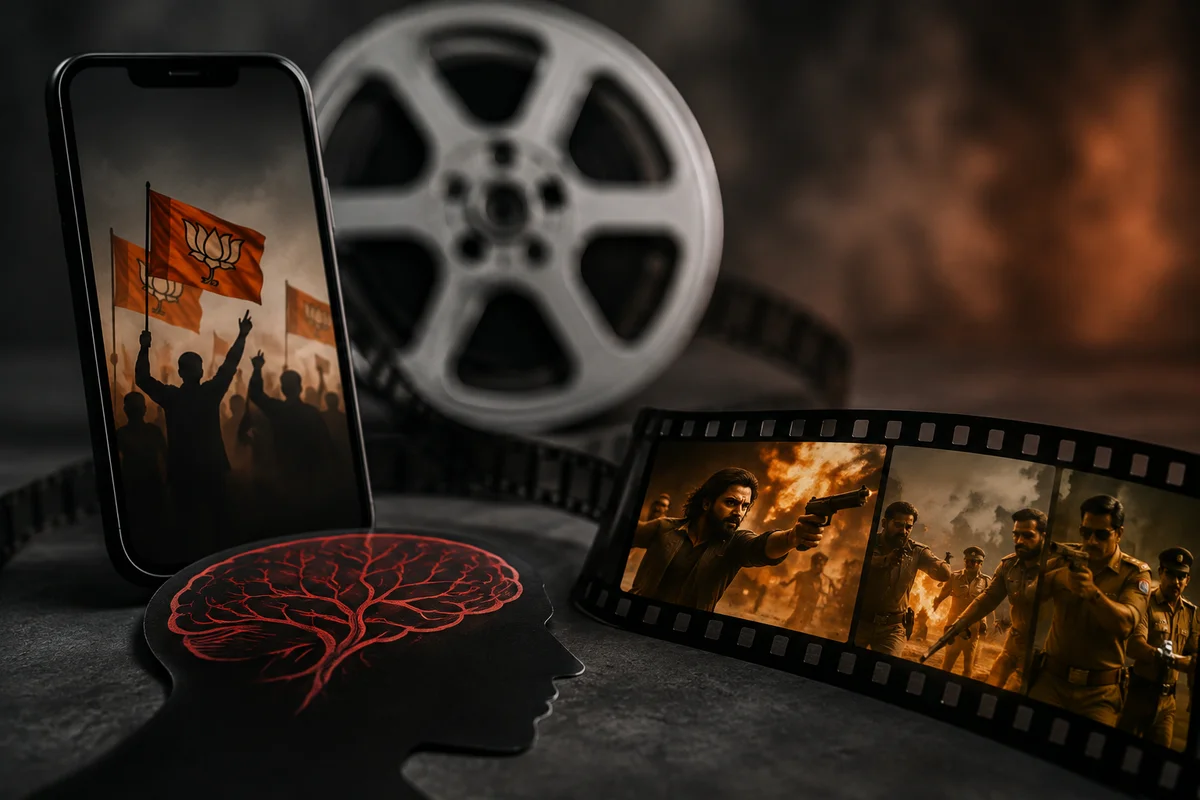
NEW DELHI: A social-media campaign built around the Bharatiya Janata Party's "Dimaagi Naxal" rhetoric has drawn criticism after several BJP state units began using clips from popular films and web series, including gunfire sequences, to amplify the party's political messaging.
The campaign follows Prime Minister Narendra Modi's Independence Day address on August 15, in which he said armed Naxalism had been defeated but that a "Naxal mindset" persisted. Modi called for identifying and isolating such elements while connecting the country's younger generation with what he described as the mainstream path of building a developed India.
Momentum built on August 26, when BJP Chhattisgarh posted "Avengers Assemble" while tagging other BJP state units and calling for a push against "Dimaagi Naxals." Since then, several BJP state social-media handles have tagged, reposted and responded to one another using memes, videos and references drawn from popular entertainment. According to India Today, the coordinated campaign has featured material from KGF, Mirzapur and RRR, among other titles, creating a cross-state exchange as individual units added their own pop-culture references while continuing the same theme. The publication also reported that a BJP leader described the recent activity as a "trailer," with the party looking to extend the strategy to other platforms, including Instagram.
Among the posts from BJP Chhattisgarh is a video using a scene from the web series Mirzapur featuring the character Munna Bhaiya in a college setting. In the edited post, a college student is labelled a "Dimaagi Naxal," with an accompanying message stating: "Instead of being Dimagi Naxal, you can be someone who can participate in the nation's progress." The post frames the "Dimaagi Naxal" label as an undesirable ideological position, steering young people instead toward national development. BJP Chhattisgarh also posted an action sequence from the film Singham with the caption: "Treatment of Dimagi Naxal in Chhattisgarh style."
One of the most controversial posts came from BJP Karnataka, which used a gunfire sequence from KGF: Chapter 2. The edited video portrays BJP units from different states as a force confronting characters labelled "Dimaagi Naxals," carrying the caption: "No slowing down - taking on 'Dimaagi Naxals' with full force." The pairing of the label with the gunfire imagery drew criticism from political opponents and social-media users, some of whom characterised the video as a threat of violence. Those characterisations reflect critics' interpretation of the post and are not evidence that the BJP issued an explicit instruction to shoot political opponents.
The Cockroach Janata Party sharply criticised the Karnataka BJP post, alleging that the imagery could be interpreted as promoting extreme violence, a claim that represents the party's own interpretation rather than a confirmed fact about the video's intent.
Beyond Karnataka and Chhattisgarh, the campaign has since spread to additional BJP state handles, which have joined the exchange using clips and references from other films and television shows, according to India Today, allowing state-level accounts to amplify one another across state boundaries.
The controversy extends beyond the phrase "Dimaagi Naxal" itself to the way it has been paired with fictional scenes depicting beatings, confrontation and, in the KGF video, gunfire. Opposition voices and other critics have questioned the use of such imagery in political campaigns, with the sharpest criticism directed at the Karnataka post over its combination of political labelling and shooting scenes.
Modi's remarks also prompted a response from AAP national convenor Arvind Kejriwal, who said he was proud to call himself a "Dimaagi Naxal" and described himself as a patriot.
The episode highlights how memes, film clips and short-form videos are being used in political communication on social media. The BJP has cast the campaign as part of its push against what it describes as a "Naxal mindset." For critics, the use of violent movie scenes alongside political labels risks framing political disagreement as confrontation with an enemy.
The videos in question are edited from fictional films and web series, and claims that the campaign amounts to a literal instruction to shoot students, activists or political opponents remain attributed to those making such claims rather than established as fact. As BJP state units continue to amplify the campaign online, questions over political dissent, ideological labelling and the boundaries of aggressive digital rhetoric remain unresolved.
Latest News
- South Africa Accuses Israel of Defying ICJ Gaza Orders
- Israel Plans Offensive Space Weapons Capable of Striking Earth Targets
- Meta, States in Settlement Talks Over Teen Safety Trial
- Greater Israel: How Ideology Is Becoming Facts on the Ground
- BJP, Meta and India’s Growing Power Over Online Content
- USCIRF Seeks Sanctions on RSS Ahead of Mohan Bhagwat’s US Visit
- Gaza Death and Injury Toll Exceeds 11% of Pre-War Population
- Humanoid Robots Could Patrol U.S. Southern Border
- Ukraine Corruption Concerns Put Pressure on EU Accession
- Hefner Contacted FBI Over Epstein in 2005, Lawsuit Says