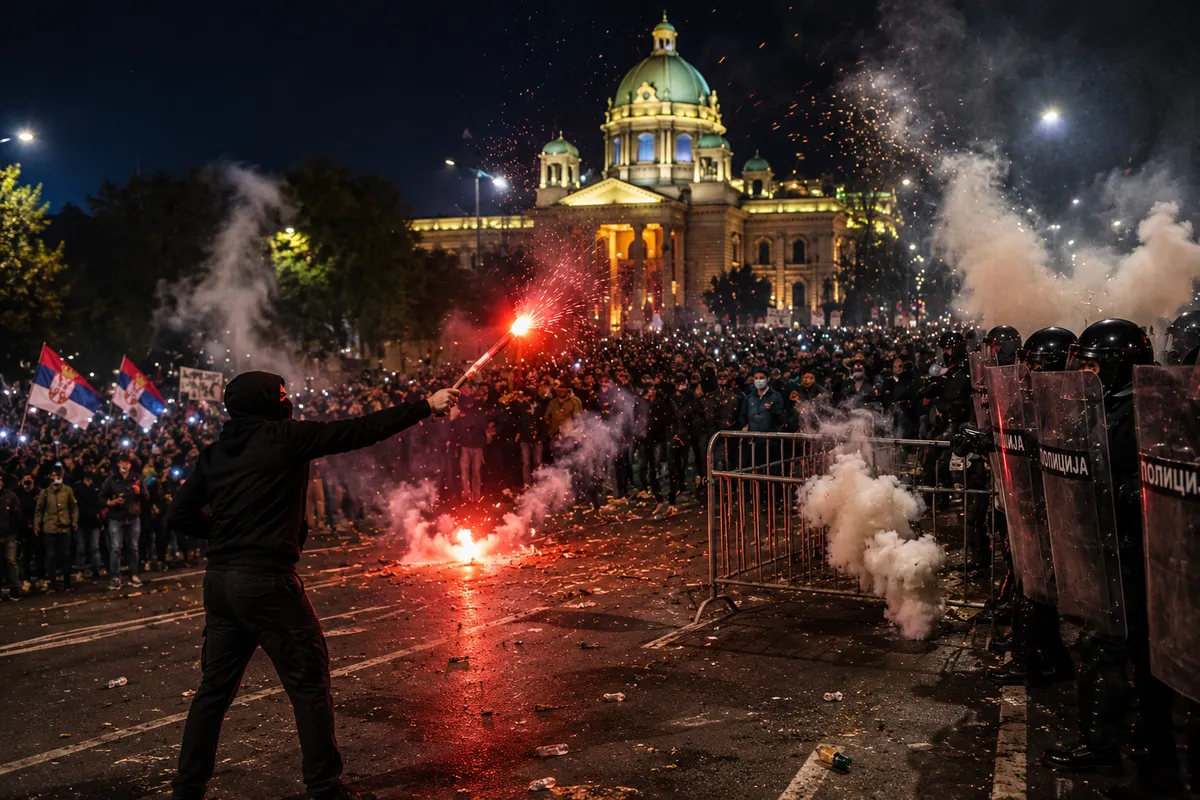
Belgrade : Saturday morning in Belgrade felt different. Thousands of people poured out of their homes — banners in hand, "Students Win" printed across their chests, and something burning behind their eyes that had been building for months. This was not just another rally. This was a breaking point.
Crowds streamed into central Belgrade from every direction. Columns of cars drove in from other Serbian towns, filling the city before noon. One message echoed everywhere — President Aleksandar Vucic's government needs to answer for what it has done.
The anger did not appear overnight. Back in November 2024, the concrete canopy at Novi Sad's railway station collapsed and killed 16 people. Many Serbians linked the tragedy to alleged corruption and poorly supervised renovation contracts, arguing that negligence was allowed to thrive unchecked for years. That tragedy lit the fuse. And it has not gone out since.
More than a year has passed since those first protests demanding accountability — and the crowds have not stopped coming.
For most of the afternoon, things stayed peaceful. Then the sun started going down.
Groups of young protesters began hurling flares, rocks, and bottles at police cordons. Officers hit back with pepper spray and charged forward to push the crowds back. Smoke rose over parts of the streets, sirens blared, and Belgrade's evening turned into something far uglier than anyone had hoped.
The government had come prepared. A fenced camp for Vucic loyalists was set up right outside the Serbian presidency building, with folk music playing and rows of riot police in full gear surrounding it on all sides. It looked less like a counter-rally and more like a fortress.
Serbia's state railway company cancelled all trains to and from Belgrade that day — a move widely seen as an attempt to stop people from travelling in from other parts of the country.
Vucic himself was not even in Serbia. He was on a state visit to China. He posted a video on Instagram saying the protesters had "shown their violent nature," and added that "the state is functioning and will continue to work in line with the law."
Parliament speaker Ana Brnabic was similarly dismissive. According to police estimates, around 34,300 people attended the rally — a figure Brnabic used to declare that "democracy is flourishing."
Those standing on Belgrade's streets that night would disagree.
The students were asking for early elections, rule of law, and real accountability for corruption — not slogans, but action. And these are not new demands. The same pressure from these protests had already forced then-Prime Minister Milos Vucevic to resign back in January 2025.
Belgrade is quieter now, but it is the kind of quiet that does not last. More protests are being planned, the world is watching, and the question is simple — how much longer can Vucic's government hold the line?