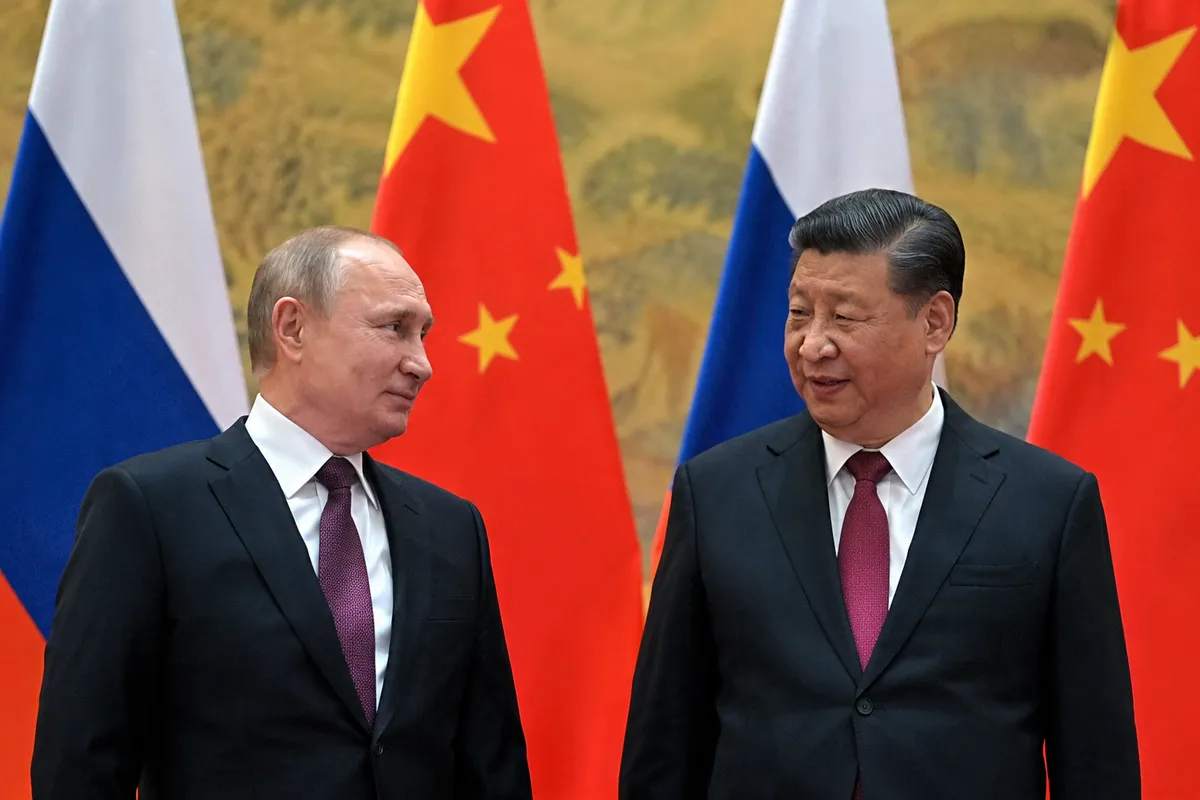
With 25 years of their partnership treaty approaching and talks expected soon, Vladimir Putin's upcoming China visit is shaping up to be one of the most significant diplomatic meetings of the year.
Vladimir Putin is preparing to visit Beijing for talks with Chinese President Xi Jinping — a visit that, even by the standards of their increasingly close relationship, carries considerable weight. The two leaders are expected to cover a broad agenda: energy cooperation, trade, the war in Ukraine, and shifting global geopolitical dynamics.
The timing is notable. This year marks the 25th anniversary of the Russia–China Treaty of Good-Neighborliness and Friendly Cooperation, the foundational document that helped deepen ties between the two countries over the past quarter century. For both sides, the summit offers an opportunity to reaffirm that relationship — and to demonstrate that Western pressure has done little to slow its growth.
Kremlin spokesman Dmitry Peskov confirmed that preparations for Putin's visit are complete, though an official schedule has not yet been publicly announced.
The relationship between Moscow and Beijing has evolved significantly since Russia's full-scale invasion of Ukraine in February 2022. China has stopped well short of providing weapons — at least publicly — but has become an important economic partner for Russia, absorbing oil and gas that Europe no longer buys and supplying manufactured goods and electronics in return. Bilateral trade has grown substantially, and both countries have moved to conduct more of that trade in rubles and yuan rather than dollars.
Officials on both sides say agreements are expected to be discussed at the summit, though specific details have not been officially announced. Energy is likely to feature prominently, with Russia keen to expand long-term gas supply arrangements with China as an alternative to the European market it has largely lost.
Beyond economics, the summit is expected to touch on broader geopolitical concerns. Beijing has expressed frustration over American restrictions on semiconductor exports, U.S. military posture toward Taiwan, and Washington's efforts to build coalitions in the Asia-Pacific. Russia, meanwhile, continues to seek Chinese political support on the Ukraine conflict. How far Xi is willing to go on that front remains an open question.
Putin and Xi have now met more than forty times — a frequency that reflects how central the bilateral relationship has become for both governments. The two leaders signed a joint statement in February 2022 describing their partnership as having "no limits," a phrase that drew significant international attention. Whether this summit produces similarly striking language, or more measured commitments, will become clear once talks conclude.