New Zealand Introduces Bill to Formally Recognize English as an Official Language
By Ferox Times |

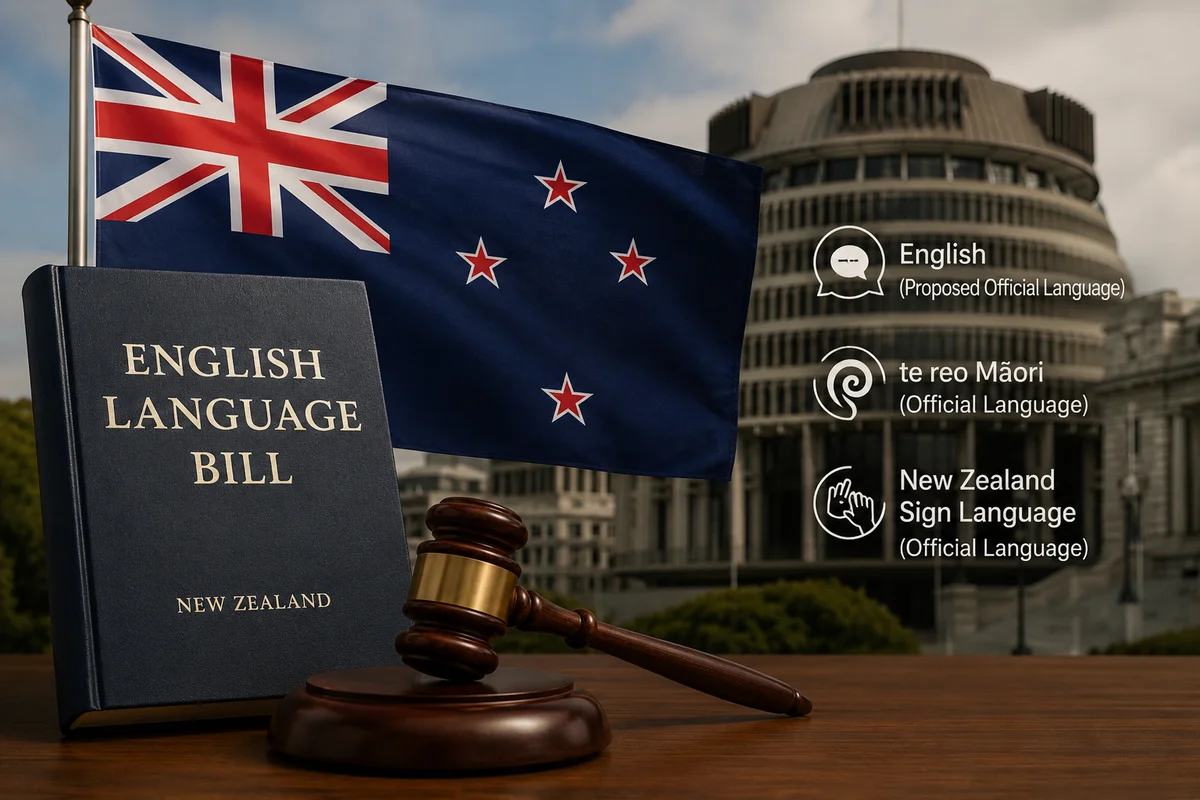
WELLINGTON, New Zealand — The New Zealand government has introduced legislation that would formally recognize English as an official language, placing it alongside te reo Māori and New Zealand Sign Language if approved by Parliament.

If passed, the bill would place English alongside te reo Māori and New Zealand Sign Language. Te reo Māori was granted that status under the Māori Language Act 1987, and New Zealand Sign Language followed under the New Zealand Sign Language Act 2006. English has never received the same formal designation, even as it has remained the language most New Zealanders use day to day.

Supporters describe the bill as a legal clarification rather than a substantive policy change. They argue that English already operates as the country's de facto principal language, and that giving it legal recognition would simply align New Zealand's legal framework with how English is already used across public life, without altering the status of te reo Māori or New Zealand Sign Language.

The bill has also drawn criticism. Opposition politicians, legal experts and Māori advocates have questioned why a language that already dominates public life needs further legal protection. Critics argue the proposal could weaken confidence in the government's commitment to protecting and promoting te reo Māori, an Indigenous language that has undergone decades of revitalization efforts.

The proposal has renewed debate over language, national identity and the balance between formally recognizing English while continuing efforts to preserve and promote te reo Māori.

The bill is now before Parliament's Justice Committee, where it is undergoing public submissions and legislative scrutiny before returning to the House for further debate and votes.


Parliament English Language te reo Māori Official Languages New_Zealand

Latest News