Wind and Solar Overtake Coal in U.S. Power Generation: What's Driving America's Energy Shift
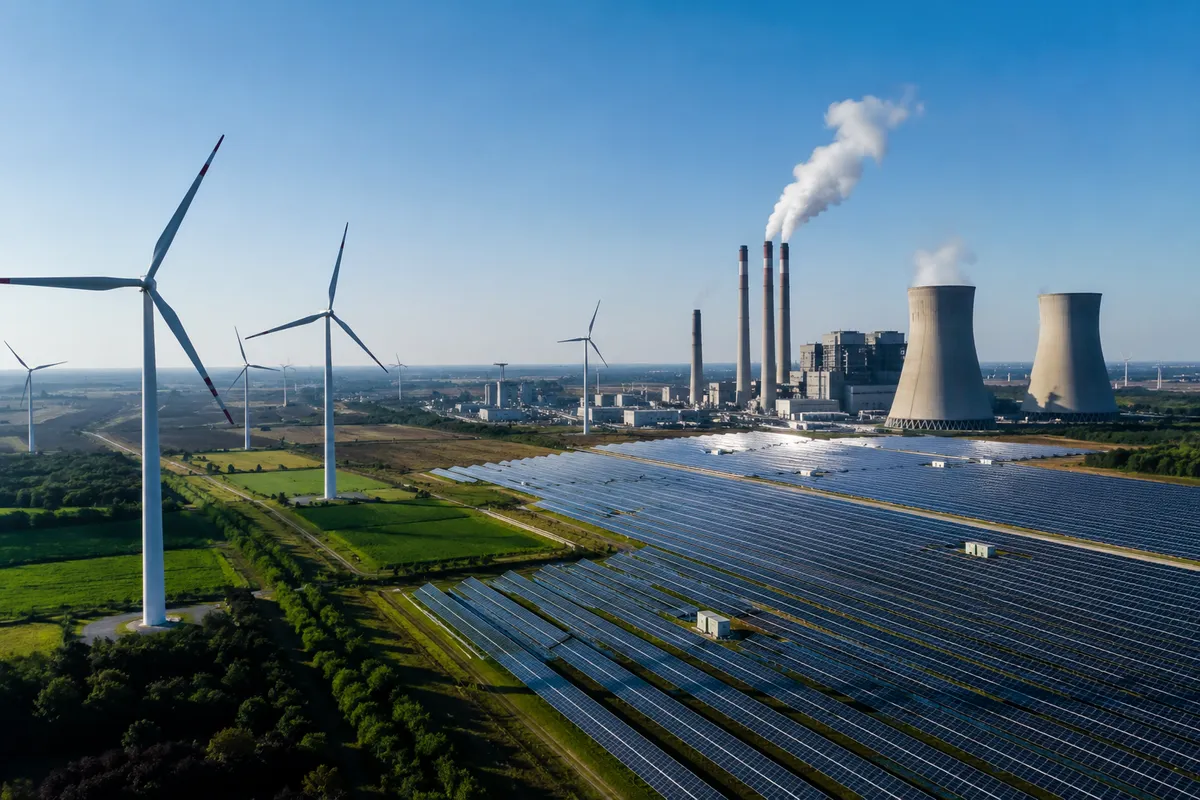
Something quietly historic happened in March 2026: for the first time anyone can remember, clean energy — wind and solar combined — pushed out more electricity across the United States than coal did. No fanfare, no ceremony. Just a number on a grid report from energy think tank Ember that would have seemed impossible a decade ago.
It's worth sitting with that for a second.
Coal powered this country for over a century. It built cities, ran factories, kept lights on through two world wars. And now, in a country still bitterly divided over climate policy, market forces have done what years of negotiations and protests couldn't quite manage on their own.
The economics just got too hard to ignore. Solar and wind have gotten dramatically cheaper over the past ten years — not slightly cheaper, dramatically cheaper — and utilities aren't sentimental. When the numbers work, they switch. Texas, of all places, tells the story well. The state that practically invented American oil culture is now on track to have solar outpace coal generation entirely in 2026, according to the U.S. Energy Information Administration. Texas didn't go green. Texas went cheap.
None of this means the climate problem is solved — far from it. The U.S. still carries an uncomfortable distinction: more cumulative carbon emissions than any other country since the industrial era began, according to Climate Watch data. And among the world's top emitters today, America still leads in emissions per person. China pumps out more total greenhouse gases annually, but spread across 1.4 billion people, the numbers look very different.
Harvard Business School's Vikram Gandhi has been making the rounds warning executives not to mistake political noise for economic reality. The Trump administration has rolled back clean-energy incentives and thrown fresh support behind coal, oil, and gas — but Reuters was reporting record renewable output in early 2026 anyway. Policy can slow a transition. It's proving much harder to reverse one.
Part of what's driving the demand surge, ironically, is the same technology boom that has people worried about AI's carbon footprint. Data centers are hungry. Electric vehicles are multiplying. Digital infrastructure needs power around the clock. That rising demand is actually accelerating investment in new generation capacity — and right now, the fastest and cheapest generation to build is renewable.
The next ten years will likely settle the question of whether the world can move off fossil fuels fast enough to matter for the climate. But whatever happens in Washington, the electricity market has already started answering that question on its own.
Sources: Harvard Business School, Climate Watch, Reuters
Latest News
- Greater Israel: How Ideology Is Becoming Facts on the Ground
- BJP, Meta and India’s Growing Power Over Online Content
- USCIRF Seeks Sanctions on RSS Ahead of Mohan Bhagwat’s US Visit
- Gaza Death and Injury Toll Exceeds 11% of Pre-War Population
- Humanoid Robots Could Patrol U.S. Southern Border
- Ukraine Corruption Concerns Put Pressure on EU Accession
- Hefner Contacted FBI Over Epstein in 2005, Lawsuit Says
- Five Shot Near Virginia State University Dorms; One Critical
- South Korea’s Lee Calls for North Korea Peace Talks
- Cristiano Ronaldo Marries Georgina Rodriguez in Portugal