Beirut | May 26, 2026
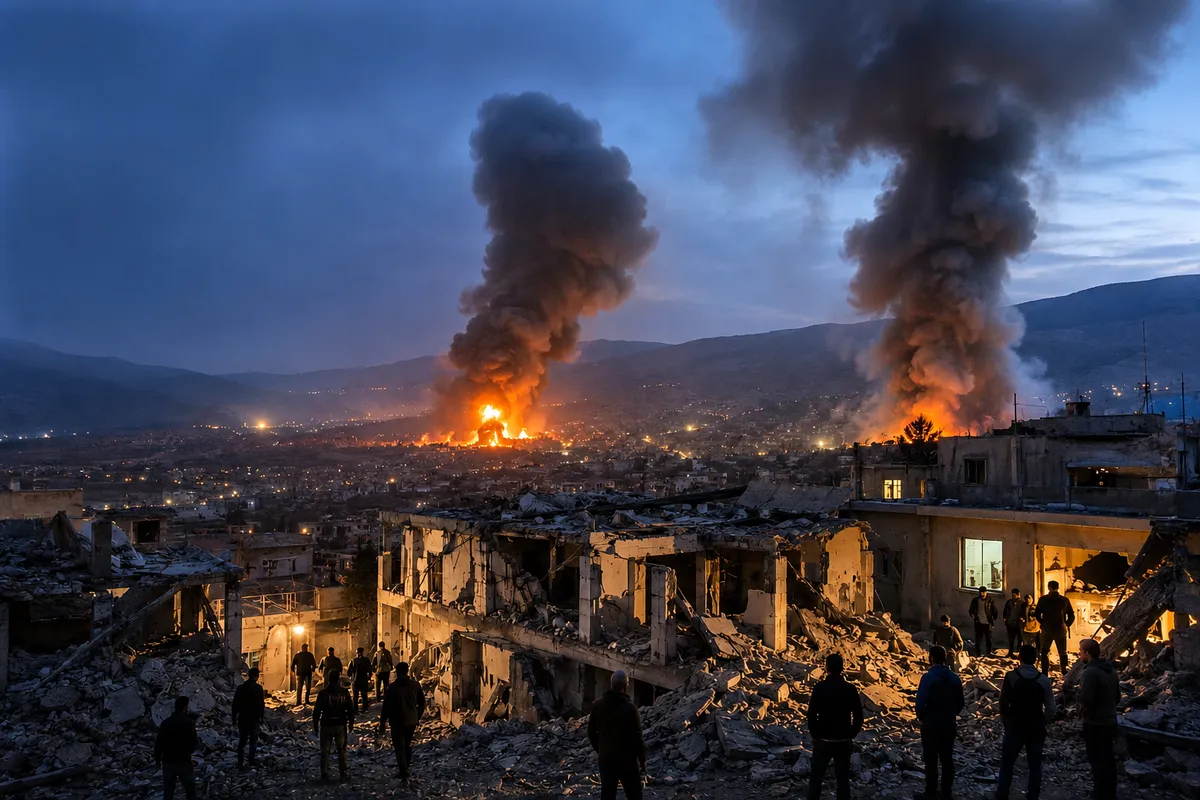
At least 11 people were killed in the Bekaa Valley village of Mashghara overnight after Israeli strikes destroyed several homes there, Lebanon's Health Ministry said Tuesday. Among the dead were one woman and two children. Another 15 people were injured. Some Lebanese media reports put the toll at 12, and the exact figure is still being confirmed by authorities on the ground.
The Israeli military released aerial footage of the strikes and said it had targeted Hezbollah infrastructure sites where "terrorist activity was identified." It added that "terrorists were eliminated" in the operation.
Netanyahu Orders More Strikes
A few hours before the Mashghara attacks, Israeli Prime Minister Benjamin Netanyahu appeared in a video statement and told his military to "press the pedal even harder" against Hezbollah.
"We are at war with Hezbollah, and we will intensify our strikes." — Benjamin Netanyahu, May 25, 2026
The announcement came in line with longstanding demands from far-right members of his coalition, who had been pushing for a broader military operation for weeks.
After the statement went out, residents in Beirut's southern suburbs began leaving. Thousands of cars filled the streets as families moved out of the area through the night. The strikes that followed spared the capital, but Lebanon's state news agency NNA and BBC correspondents on the ground counted dozens of attacks across nearly 50 locations between Monday evening and early Tuesday morning.
In the southern town of Arab Salim, a man and his wife were killed in a strike on their home Monday evening. Two more people died in the village of Kauthariyet El Rez, according to NNA.
What the Military Says It Hit
The Israeli military said it struck over 100 Hezbollah targets in a single night — including more than 90 weapons storage facilities, command centers, and observation posts across southern Lebanon. It described the operation as the heaviest single night of strikes since the ceasefire came into force in mid-April.
On Tuesday morning, military spokesman Colonel Avichay Adraee issued fresh evacuation warnings for parts of Lebanon, saying Hezbollah's "repeated violations" of the ceasefire had left Israel with no other option.
Hezbollah, for its part, said it had struck "three barracks and a military post" in northern Israel — in response to what it called Israeli violations of the same ceasefire.
The Ceasefire, on Paper
The US-brokered ceasefire — backed by the Trump administration — officially remains in place. It came into effect on April 16, starting as a 10-day truce. It was extended by three weeks on April 23, and then again on May 15. The US State Department confirmed the latest extension in a statement:
"The April 16 cessation of hostilities will be extended by 45 days to enable further progress." — US State Department Spokesman Tommy Piggott, May 15, 2026
The next round of talks is scheduled for June 2 and 3 in Washington.
Both sides have continued military activity throughout this period. Israel has carried out near-daily strikes, particularly across southern Lebanon. Hezbollah has launched rockets and drones at communities in northern Israel and at Israeli troops occupying parts of southern Lebanese territory. Each side accuses the other of breaking the agreement first.
Fiber-Optic Drones
One specific factor cited in Netanyahu's escalation order was Hezbollah's increasing use of fiber-optic guided drones. Unlike standard remote-controlled drones, these are guided by wire, which makes them harder to jam using conventional electronic countermeasures. The tactic has been reported by AP and other outlets covering the conflict.
Recent incidents included a drone strike on a home in Metula and another at a school bus stop in Shomera. No injuries were reported in either case, but Israeli military officials pointed to these attacks as part of the reason for stepping up operations.
Numbers
Since the conflict escalated on March 2, 2026, Lebanon's Health Ministry has recorded over 3,185 deaths from Israeli strikes. On the Israeli side, the military says 23 soldiers and one civilian contractor have been killed in Hezbollah attacks since that date.
By mid-April, UN and Lebanese government figures put the number of internally displaced people in Lebanon at over one million.
How This Fits Into the Wider Picture
This conflict did not begin in isolation. The current round of fighting started on March 2, when Hezbollah fired projectiles toward Israel following the killing of Iranian Supreme Leader Ali Khamenei, and Israel responded with strikes. The broader regional picture includes the 2026 Iran war and a separate US-Iran ceasefire brokered by Pakistan on April 8 — an agreement that did not formally include Lebanon, leaving the conflict there on its own track.
US-Iran negotiations are ongoing. Lebanon talks are tied to that larger diplomatic process. What comes out of the June meetings in Washington will likely determine whether this ceasefire survives the summer — or whether it exists only on paper.